Two buyers order the same 20 ton forklift. One lifts steel coils every day without strain; the other sees the mast flex on the first shift. The difference is rarely the truck — it is the load center and lift height.
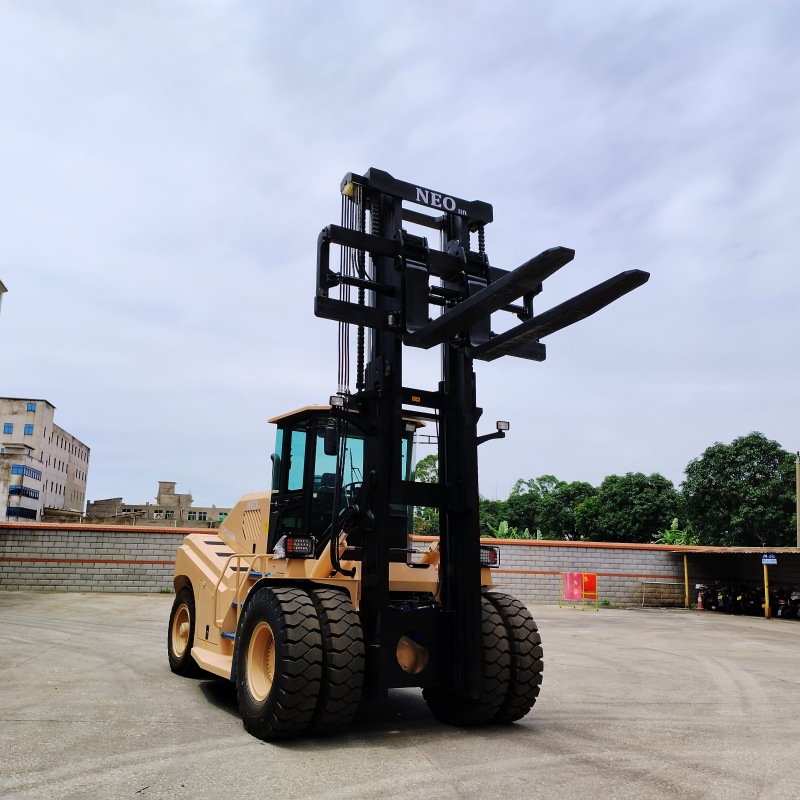
Rated capacity is measured at a stated load center and lift height. Move the load further from the fork heel, or lift higher than the rating point, and safe capacity drops. That is why a 15 Ton Heavy-duty Electric Forklift Truck must always be checked against the derated load chart rather than its headline tonnage.
Start with three numbers: cargo weight, the horizontal distance from the fork heel to the load's centre of gravity, and the maximum lift height. Then add the attachment — a coil ram, clamp or spreader adds its own weight and pushes the centre further forward.
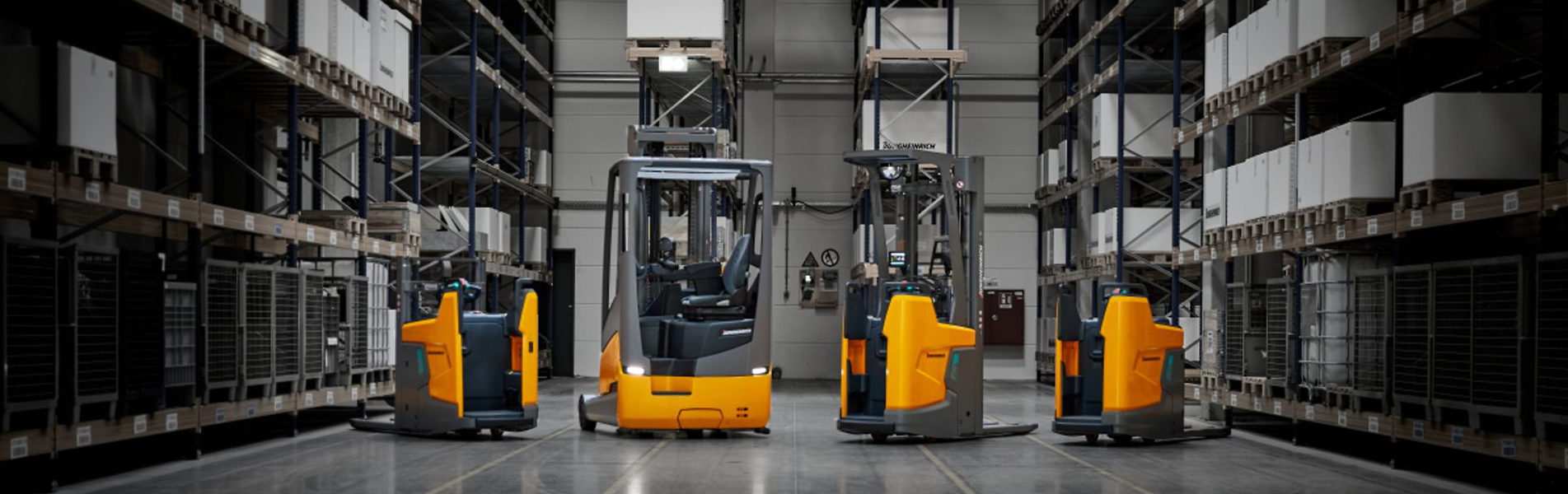
For dense cargo, the answer is usually 10-50 ton heavy-duty forklift engineering: a wider wheelbase, reinforced mast and a larger counterweight, not a bigger engine on a light chassis. Where loads are long and aisles narrow, a Narrow body electric seated multi-directional forklift turns the load in place, so a shorter, lower-cost truck handles the same tonnage. For heavier long material, NEO FORKLIFT offers an Electric multi-directional forklift for long material and a Heavy duty electric multi-directional forklift with the same sideways-travel principle.
Power follows duty cycle. Heavy-duty electric forklifts suit indoor, repeat-cycle work with lower energy cost; heavy-duty diesel forklifts stay the safer choice for outdoor yards, ramps and continuous 8-12 hour shifts, where a Heavy capacity diesel forklift truck keeps working through weather and gradients.
NEO FORKLIFT builds both, engineered to your own load chart, with custom mast, fork and attachment options and global parts support.
FAQ
What is the load center of a forklift?It is the horizontal distance from the fork heel to the load's centre of gravity. Capacity is rated at that distance.
Can I lift more than the rated capacity if the load is closer to the mast?Sometimes, but only within the manufacturer's derated load chart. Never exceed the chart value.
Does lift height reduce capacity?Yes. Higher lift points reduce safe capacity, especially on tall masts.
Do steel coils need special equipment?Dense coils usually need a coil ram or clamp plus a matching load chart.