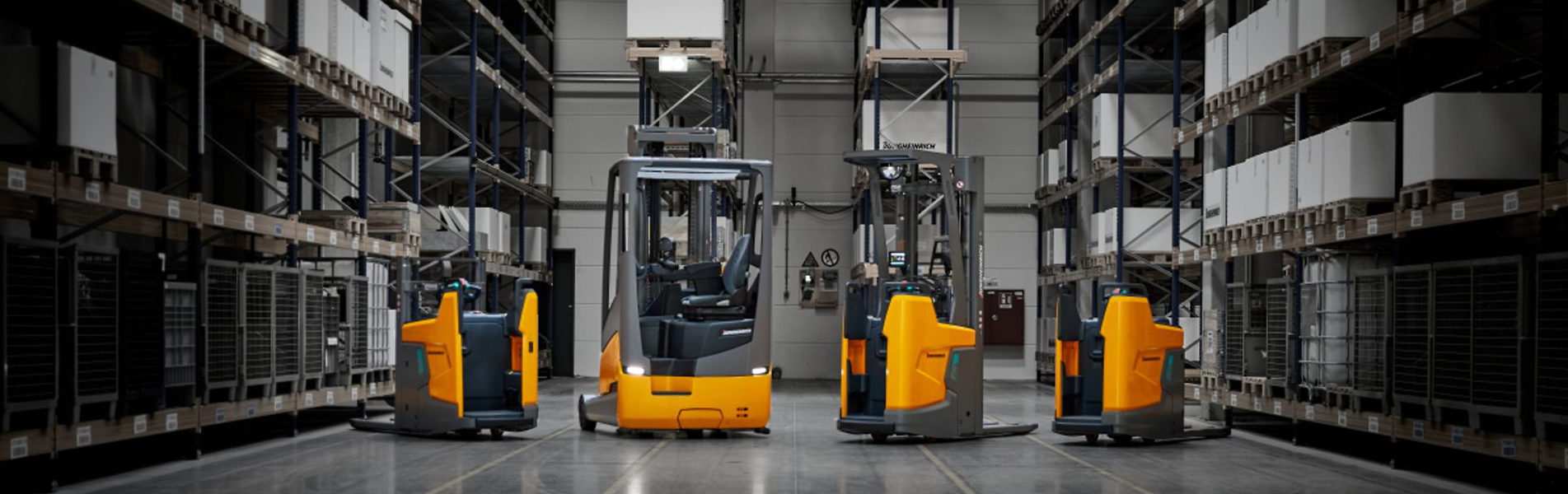
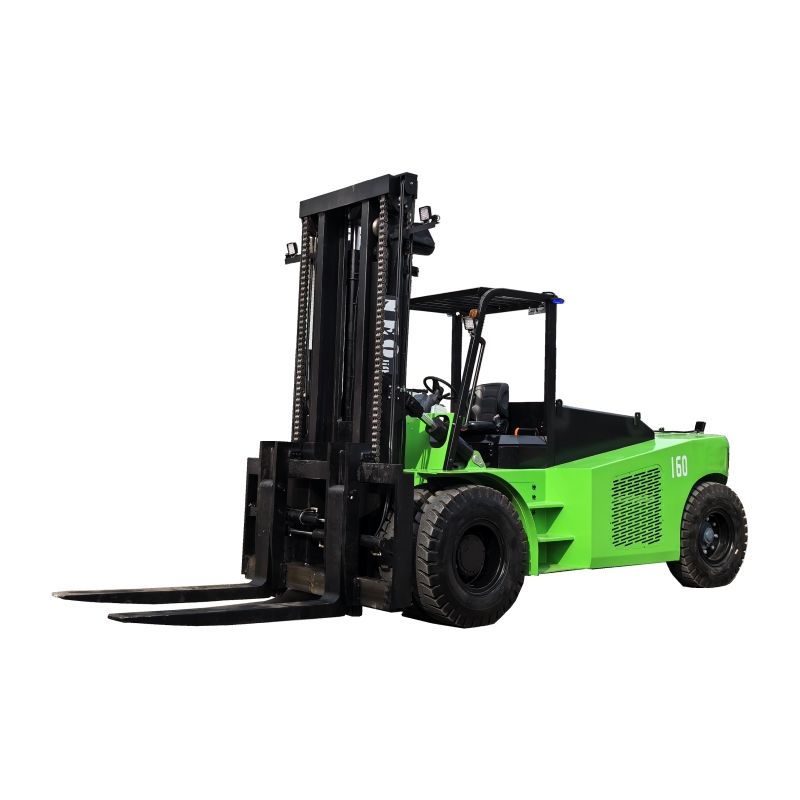
You need a custom electric forklift for your unique application. Start by defining your non-standard requirements. Then evaluate each manufacturer's engineering depth, customization track record, quality certifications, and post-sale support. Custom electric forklifts succeed or fail on engineering discipline, not price alone. A wrong partner means downtime, safety risk, and sunk capital. Vetting must be rigorous and sequential. The right customized material handling equipment partner validates your application from first spec to final delivery.
Write down your exact load weight, work environment, and needed attachments before talking to manufacturers.
Choose a manufacturer with in-house engineers, strict testing, and ISO 9001 and 14001 certifications.
Compare total cost of ownership, not just upfront price, and ask for references from similar projects.
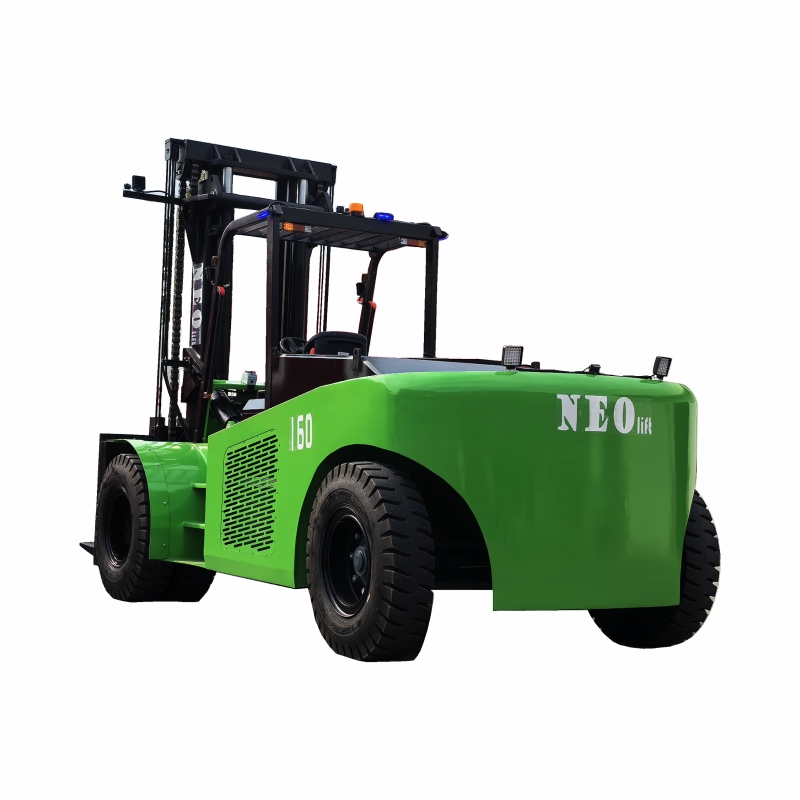
Every successful engagement begins with precise documentation of your application needs. You cannot expect a manufacturer to deliver reliable customized material handling equipment if you cannot define what makes your operation unique. Three core areas require your attention.
You must record the exact weight of every load your forklift handles. Specify the maximum load capacity and the load center distance. Standard forklifts often fail when loads shift or exceed design limits. Capacity upgrades and reinforced chassis designs depend on accurate numbers. Provide these specifications to your manufacturer.
Your operating environment determines critical design parameters. Cold-storage facilities require specialized electrical components. Explosive environments demand explosion-proof configurations. Corrosive settings need corrosion-resistant materials. Your duty cycle also matters. Record shifts per day, operating hours, and travel patterns.
|
Non-Standard Requirement Category |
Description |
|---|---|
|
Fork and attachment modifications |
Extended forks and specialized attachments tailored to unique load handling |
|
Capacity upgrades |
Increased load capacity and reinforced chassis for heavier loads |
|
Mast and structural redesign |
Mast redesign and reinforced chassis for heavier loads or unusual lifting heights |
|
Environment-specific configurations |
Cold-storage, explosion-proof, and corrosion-resistant designs for extreme environments |
|
Automation integration |
AGV-ready automated systems for unmanned operations |
|
Dimensional/space constraints |
Tailored electric stackers and reach trucks for narrow warehouse aisles |
|
Heavy-duty applications |
Custom carriers, coil handlers, and mold handling carts for 1–30 ton loads |
You must catalog every attachment your operation requires. Common custom attachments include:
Side shifter
Clamp attachment
Fork rod
Rotator
Extended fork arm
Anti-slip fork
You may also require automation integration for AGV-ready systems. A complete list allows your customized material handling equipment partner to engineer the correct hydraulic and control systems from the start. Missing details lead to costly retrofits later.
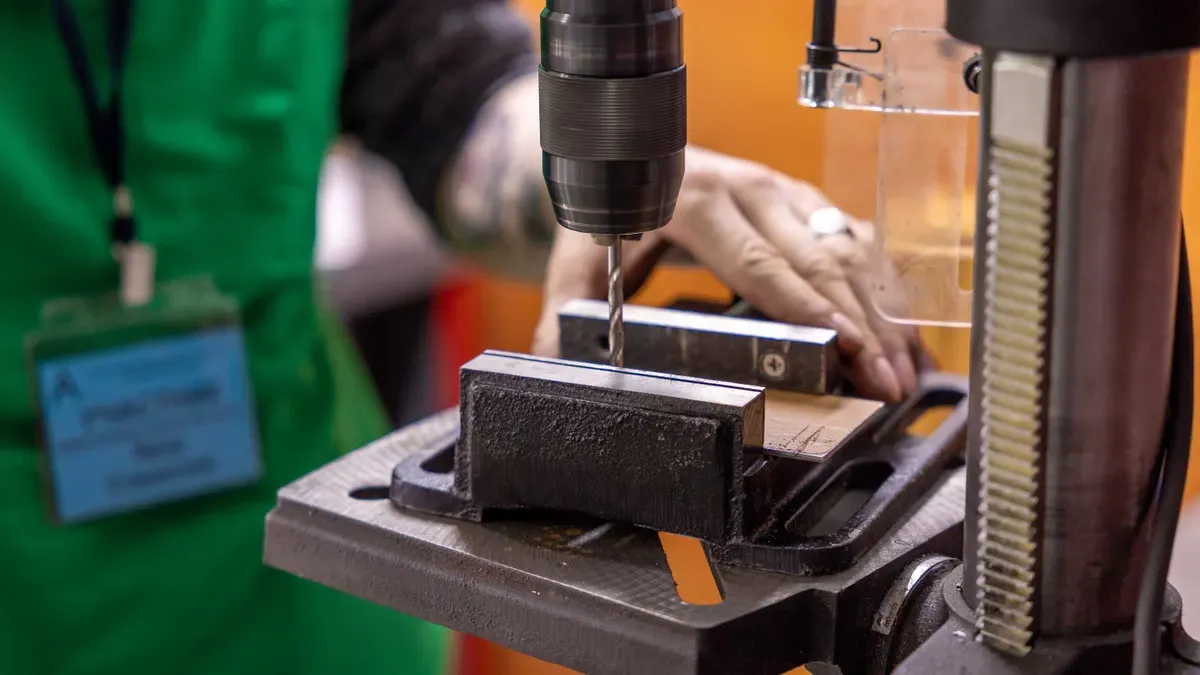
Engineering depth separates a true custom manufacturer from a standard forklift supplier with a paint job. You need a partner who designs, tests, and validates every component for your specific application. This section shows you how to assess that capability before you commit capital.
Ask every candidate manufacturer one critical question: Do you perform engineering work in-house or outsource it? In-house engineering gives you direct access to the people who design your customized material handling equipment. Outsourced engineering adds communication layers, delays, and accountability gaps.
A capable manufacturer uses advanced design tools. Look for these capabilities during your evaluation:
Finite Element Analysis (FEA) for structural stress and deflection evaluation
Computational Fluid Dynamics (CFD) for thermal and airflow analysis
Motion and kinematic analysis for moving component evaluation
3D CAD modeling for every component in the system
Electrical, hydraulic, and pneumatic schematics
Geometric Dimensioning and Tolerances (GD&T) development
Design for Assembly (DFA) and Design for Manufacturing (DFM) services
These tools allow engineers to digitally evaluate all moving components throughout their full range of motion. They identify interferences, clearance issues, and unintended interactions early in the design process. Virtual tests enable rapid design iterations. This approach reduces physical prototyping time and cost significantly.
CAx software serves as an integration platform for simulation and analysis tools. Engineers transition from design to analysis without complex data transfers. This integration ensures seamless data exchange between different engineering domains. It promotes collaboration and eliminates manual data re-entry. Emerging trends include cloud-based solutions, artificial intelligence integration, and multi-disciplinary optimization.
You should also examine the manufacturer's actual project portfolio. A proven track record demonstrates real engineering capability. Consider these examples of customized material handling equipment:
Electric die handler and mold transfer truck: Handles molds up to 600mm x 600mm and as small as 500mm x 500mm, supports low-profile dies at 70mm height, and uses an advanced electric push-pull mechanism for millimeter-perfect docking into industrial furnaces.
Stand-up counterbalanced floor crane with telescopic boom: Features a boom rotating a full 180 degrees, a telescopic extension for overhead lifting over obstacles, and a zero-outrigger counterbalanced chassis.
Electric forklift battery handling stacker and transfer cart: Equipped with a 1.5KW vertical drive motor, a 2.2KW power unit, and a 24V/210Ah lead-acid battery pack, with a dedicated gripping mechanism for multi-ton battery units.
Electric roll handler with 360-degree rotation and wireless remote control: Uses a pneumatic expanding air shaft that grips rolls from the inner core, provides full 360-degree continuous rotation, supports loads up to 1 ton, and includes wireless remote operation.
CDD10-BF electric roll handler with push-off: Achieves 500mm effective stroke with 2-3mm positioning accuracy, maximum electric lifting height of 1950mm, effective load length up to 960mm, customizable arm dimensions, and a 40CR lead screw for vibration-free lifting.
These examples show what deep engineering capability looks like in practice. The manufacturer conducts comprehensive factory tours and technical briefings to understand client-specific operational challenges. They address ultra-narrow aisles, zero-vibration mold handling, and millimeter-level docking accuracy. Rapid prototyping and robust assembly line capabilities transform unique requirements into high-performance machinery. The company actively absorbs advanced domestic and international technology. They refuse to compromise on core mechanical components by using internationally renowned brand parts. They provide tailor-made custom services based strictly on specific customer needs.
Prototyping and testing validate your custom design before full production. A rigorous manufacturer builds physical prototypes and subjects them to real-world conditions. They test load capacity, stability, braking performance, and electrical safety. They verify every attachment and integration point.
Safety compliance is non-negotiable for custom electric forklifts. Compliance operates at two levels: product standards and workplace regulations. You must verify both.
|
Standard/Regulation |
Legal Status |
Relevance for Custom Electric Forklifts |
|---|---|---|
|
OSHA 29 CFR 1910.178 |
Mandatory in U.S. workplaces |
Requires employer responsibilities for safe operation, including pre-shift checks, training, and written manufacturer approval for any modification or attachment that affects capacity or safety. Custom electric forklifts must have updated capacity plates. |
|
ANSI/ITSDF B56.1 |
Industry consensus standard (not law itself) |
Often used as a technical reference for design and safety in North America. Buyers must confirm current requirements with the manufacturer and local authorities; not a standalone mandatory certificate. |
|
ISO 3691 series |
International voluntary standard |
Provides global safety requirements and verification principles for industrial trucks. Does not replace national laws; serves as a design baseline but must be complemented by local mandatory regulations. |
|
CE marking (EU Machinery Directive) |
Mandatory for placing machinery on the European Economic Area market |
Requires product conformity documentation, safety labels, and technical files. Not interchangeable with OSHA; a forklift sold in the EEA must carry valid CE marking. Custom configurations must be reassessed. |
|
National/local regulations |
Vary by country (e.g., emissions, electrical, inspections) |
May add country-specific mandatory requirements for battery charging, hazardous locations, operator licensing, and periodic inspections. Custom electric forklifts must be evaluated against the destination country's rules. |
Compliance is layered. A custom electric forklift must meet both product-level standards (ISO, CE) and workplace-level regulations (OSHA, local rules). Modifications and attachments always require manufacturer approval to maintain compliance.
Ask your candidate manufacturer for documentation of their testing protocols. Request evidence of type testing and safety validation. A serious manufacturer welcomes this scrutiny.
Quality certifications provide independent verification of a manufacturer's processes and products. You should prioritize manufacturers with recognized certifications. These credentials reduce risks and ensure forklifts meet legal and operational requirements.
Look for these certifications during your evaluation:
ISO certifications (like ISO 9001) that demonstrate consistent quality management
Safety regulation compliance such as OSHA or ANSI standards
Environmental certifications like ISO 14001 that indicate eco-friendly manufacturing
The following table explains what each certification means for a custom electric forklift manufacturer:
|
Certification |
Role for a Custom Electric Forklift Manufacturer |
Key Benefits |
|---|---|---|
|
ISO 9001 |
The foundational Quality Management System (QMS) standard — described as the bedrock and most critical standard for a reputable forklift manufacturer. |
Ensures design reliability via structured design reviews and risk assessments; enforces full component traceability (critical for safety recalls); mandates inspection of key components (mast assembly, hydraulic systems, chassis welding); drives continuous improvement to reduce defects and extend product lifespan. |
|
ISO 14001 |
Environmental Management System (EMS) standard — increasingly vital for sustainability-focused buyers. |
Reduces ecological footprint through strict energy, water, and waste protocols; promotes eco-friendly materials (low-VOC paints, recyclables); guides compliance with battery disposal and recycling standards — a key differentiator for electric forklift buyers with ESG goals. |
|
Verification (both) |
Buyers should verify certificate validity (issue/expiry dates, authenticity via certification body) and confirm the scope covers Design, Manufacturing, and Sales of Forklift Trucks — not just an isolated department. |
Choosing an ISO-certified manufacturer reduces downtime, stabilizes the supply chain, and lowers Total Cost of Ownership (TCO). |
|
After-Sales (ISO 9001) |
Extends quality commitment beyond the factory to service and maintenance. |
Guarantees genuine, compatible spare parts; ensures efficient, standardized service response; standardizes technical documentation and operator/technician training. |
|
Electric-Specific (ISO 9001 + 14001) |
Quality systems focus on the Battery Management System (BMS), electrical safety, and charging protocols for high-voltage systems. |
Mitigates risks associated with high-voltage systems; ensures peak performance and longevity of the power source; supports responsible handling of hazardous battery materials. |
Beyond ISO certifications, you should verify specific manufacturing credentials. These documents confirm a manufacturer's legal standing and technical capability:
|
Certification / License |
Issuing Authority |
Significance |
|---|---|---|
|
Trademark Registration Certificate |
Intellectual Property Office |
Confirms official brand ownership and legal standing |
|
Special Equipment Manufacturing License |
State Administration for Market Regulation |
Mandatory qualification to legally manufacture special equipment |
|
Type Test Certificate |
Construction Machinery Quality Inspection and Testing Center |
Validates products passed rigorous engineering type testing |
ISO 14001 certification ensures strict control over lead, acid, and manufacturing waste during production. For OEMs, partnering with a certified supplier reduces environmental compliance risks, protects brand reputation, and guarantees seamless entry into markets with stringent ESG requirements like Europe and North America. A manufacturer with dual-track ISO 9001 and ISO 14001 quality systems uses automated production equipment. Every production batch undergoes total inspection for internal resistance, exact discharge capacity, and container seal integrity.
You should verify certificate validity by checking issue and expiry dates. Confirm authenticity through the certification body. Ensure the scope covers design, manufacturing, and sales of forklift trucks — not just an isolated department. Prioritize manufacturers with proven experience, flexible customization, strong support, and recognized certifications. This approach secures reliable and compliant forklifts for your operation.
Price alone does not determine the best partner. You must weigh cost against value, verify support infrastructure, and confirm real-world performance through references.
A low quote often signals hidden risks. You should evaluate total cost of ownership (TCO) instead of sticker price. TCO captures every dollar from acquisition to decommissioning. Industry data for 2026 shows electric fleets deliver a 43% reduction in TCO over a five-year lifecycle compared to internal combustion models. Electric powertrains offer a 5–7 year lifespan with minimal degradation. The real metric is cost per operating hour, not upfront price.
Lead times also affect your planning. Standard stock models ship in 2–4 weeks. Custom specifications, OEM branding, or non-standard battery configurations require 6–10 weeks. CE or specific market certification documentation adds additional time. Total timeline from confirmed purchase order to delivery runs 10–16 weeks. Customized forklifts with special attachments or unique power systems need 8–12 weeks or more.
You need guaranteed access to genuine spare parts. Ask about local spare-parts depots. A manufacturer relying only on direct factory shipping creates downtime risk. Warranty terms shorter than 12 months or heavily restricted coverage represent red flags. Your customized material handling equipment partner should provide standardized service response and genuine, compatible components.
You must verify a manufacturer's track record. Request references from customers with similar applications. Ask for case studies documenting field performance. A trustworthy manufacturer allows factory visits and provides documented results. Walk away if a supplier dodges technical questions, cannot produce genuine project references, or emphasizes price alone rather than application fit.
Define your specs, vet engineering depth, verify certifications, check support, compare value, and confirm references. The best manufacturer validates your unique application from first spec to final delivery. Use this pre-purchase checklist:
Document load, environment, and attachment needs.
Confirm in-house engineering and testing.
Verify ISO and safety certifications.
Assess parts, service, and warranty.
Request references from similar projects.
Custom electric forklifts typically require 8 to 12 weeks. Complex attachments or unique power systems may extend this timeline. Standard stock models ship faster.
You should verify ISO 9001 and ISO 14001 certifications. Also confirm safety compliance with OSHA or ANSI standards. Check the Special Equipment Manufacturing License for legal standing.
Ask about in-house design tools like FEA and 3D CAD. Request case studies from similar applications. A capable manufacturer provides factory tours and technical briefings.
Zon-Cho Huge location near you