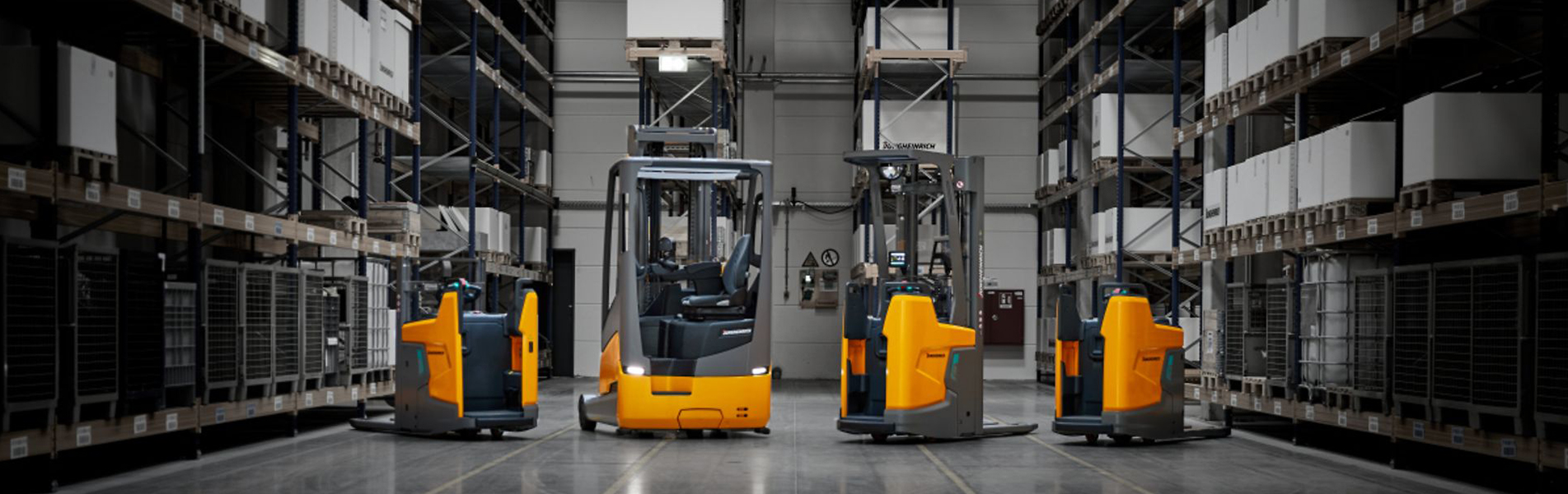

Select a cold storage electric forklift by starting with the battery. Lithium-ion batteries deliver reliable sub-zero performance and lose minimal capacity in freezer environments.
Confirm the hardware—hydraulics, seals, and lubrication—carries a factory rating for continuous freezer operation. Occasional cold exposure does not qualify.
Match load capacity, lift height, and narrow-aisle turning radius to your warehouse stacking and throughput demands.
Choose a lithium-ion battery for reliable power in freezing temperatures.
Verify that the forklift has cold-rated seals, lubricants, and electrical protection.
Implement safety measures like anti-skid tires and regular maintenance to prevent accidents.
Your freezer warehouse operates around the clock. Workers enter and exit freezer zones many times per shift. Each door opening releases cold air and pulls in warm, humid air. A cold storage electric forklift must handle this constant traffic without downtime. You need a machine that starts reliably at minus 20 degrees Fahrenheit or lower. High throughput demands fast acceleration, quick lifting speeds, and minimal battery charging interruptions. Choose a model with fast-charge capability and hot-swappable batteries. These features keep your operation moving through peak cycles.
Freezer warehouses maximize every cubic foot of space. You likely stack pallets five to eight levels high. Your aisles may measure only eight to ten feet wide. A cold storage electric forklift must deliver high lift heights without sacrificing stability. Look for a model with a tight turning radius and precise mast controls. Reach trucks and order pickers often suit these conditions better than standard counterbalance models. Confirm the forklift's residual capacity at your maximum lift height. Cold temperatures reduce hydraulic response, so you need extra margin on every lift.
Your facility likely includes multiple temperature zones. These zones range from ambient loading docks to blast freezers at minus 30 degrees Fahrenheit. A forklift may travel between these areas dozens of times per day. This movement creates thermal shock for the machine's components. You need a forklift rated for continuous transition between temperature extremes. Check the manufacturer's specifications for the acceptable temperature range. Verify that seals, lubricants, and electronics tolerate rapid temperature changes. A machine built only for steady cold operation may fail in your mixed-zone environment.
Battery performance defines your forklift's productivity in a freezer. Lithium-ion batteries outperform lead-acid alternatives in sub-zero conditions. A lithium-ion battery maintains 80 to 90 percent of its rated capacity at minus 20 degrees Fahrenheit. A lead-acid battery may lose 30 to 50 percent of its capacity at the same temperature. This difference directly affects your shift length and charging frequency.
You need to evaluate the discharge curve, not just the nominal capacity. A battery with a flat discharge curve delivers consistent power throughout the shift. A battery with a steep curve loses voltage quickly under load. Cold temperatures accelerate voltage drop. Ask your supplier for discharge test data at your warehouse's lowest operating temperature. This data reveals the true runtime you can expect.
Fast-charge capability matters in high-throughput freezer operations. Lithium-ion batteries accept fast charging without damage. You can opportunity-charge during breaks and shift changes. This approach eliminates the need for battery swapping and reduces your fleet size. Confirm the charger operates reliably in cold ambient conditions. Some chargers derate their output in freezing temperatures, which extends charge times.
Cold temperatures attack every rubber and polymer component on your forklift. Standard seals become brittle and crack. Hydraulic hoses stiffen and leak. You need a cold storage electric forklift with factory-installed cold-weather adaptations. These adaptations include low-temperature seals, flexible hydraulic hoses, and cold-rated lubricants.
Lubrication requires special attention. For cold storage forklift masts and chains, the lubricant must remain fluid at extremely low temperatures. A cold-rated chain lubricant with a low-temperature penetration rating below minus 20 degrees is specified to maintain flow characteristics and keep chain links lubricated in deep-freezer applications. Standard grease or chain lubricant that performs well at 70 degrees can become nearly solid at 0 degrees, preventing proper penetration between chain links and leaving pins and bushings inadequately lubricated.
You should verify several lubrication points during your hardware evaluation:
Freezer-rated forklifts use low-temperature grease for mast channels and load wheels because standard grease stiffens and stops distributing in cold conditions.
Cold-rated hydraulic oil and low-temperature grease are specified for continuous duty down to roughly minus 30 degrees Celsius.
Standard hydraulic oil thickens sharply as temperatures fall, which can slow lift speed and strain the pump, so low-viscosity hydraulic fluid is used instead.
Electrical protection is equally critical. Condensation forms when your forklift moves between temperature zones. This moisture attacks controllers, sensors, and wiring harnesses. Cold storage forklifts are equipped with highly protected electronics featuring anti-condensation design. Controllers, sensors, and wiring harnesses carry high IP ratings such as IP54 or IP65, meaning they are sealed against moisture ingress. Critical components often include built-in heating elements to prevent internal moisture from freezing.
For an industrial electric forklift to be considered waterproof, it must have sealed controllers and protected electrical junctions. Each wire harness is treated, and connectors are typically automotive-grade sealed units. Most outdoor-capable electric forklifts fall within the IP54 to IP65 range, which helps determine suitability for damp warehouses or demanding industrial environments. Forklifts with IP54, IP55, or IP65 protection are commonly recommended for wet environments.
You must understand the fundamental engineering differences between a standard forklift and a cold storage-specific model. In sub-zero environments (typically minus 18 degrees Celsius to minus 40 degrees Celsius or lower), conventional material handling equipment faces severe constraints. Standard structural steels and hydraulic components experience reduced ductility and increased fracture susceptibility below minus 20 degrees Celsius, a phenomenon known as cold-induced embrittlement. Hydraulic fluid crystallization, battery performance degradation, and material brittleness are primary technical challenges. These factors make specialized engineering solutions—such as cold-rated lubricants, enhanced electrical protection, and cold-resistant batteries—essential for continuous sub-zero operation, distinguishing cold storage forklifts from standard models.
The following table summarizes the critical design differences you should verify with your supplier:
|
Design Feature |
Standard Forklift |
Cold Storage-Specific Forklift |
|---|---|---|
|
Operating environment |
Standard indoor/outdoor conditions |
Refrigerated and freezer environments |
|
Temperature resistance |
Limited to specified operating conditions |
Designed/configured for specified low temperatures |
|
Lubrication |
Standard fluids |
Cold-temperature-rated fluids/lubricants where required |
|
Electrical protection |
Standard protection |
May include enhanced protection against condensation and moisture |
|
Battery performance |
Optimized for normal temperatures |
Battery appropriate for cold conditions |
|
Tires |
General-purpose options |
Options selected for cold-room surfaces and traction |
|
Corrosion protection |
Standard |
Enhanced protection may be required |
|
Operator protection |
Standard |
May include heated or insulated operator compartments |
|
Maintenance needs |
Standard service schedule |
Additional attention to cold, moisture, condensation, and battery performance |
Beyond the table, you should confirm several additional hardware features. Cold storage forklifts use tires engineered for damp, slippery, or icy floors (from condensation, water, ice, or food-processing moisture) to maintain traction, stability, and maneuverability. Because operators spend extended periods in freezer environments, cold storage forklifts may feature heated operator compartments, insulated cabins, and heated seats. Due to moisture, condensation, and cleaning processes, cold storage forklifts use corrosion-resistant materials, protective finishes, or specially treated components.
You should request documentation for every cold-weather claim. Ask for test reports that show component performance at your specific operating temperature. Verify that the manufacturer rates the forklift for continuous duty, not intermittent exposure. A machine rated for occasional cold exposure will fail under continuous freezer operation. Check the warranty terms carefully. Some manufacturers void warranty coverage when you operate a standard forklift in freezer conditions. A true cold storage electric forklift carries a warranty that explicitly covers sub-zero operation.
Cold temperatures change how your battery performs. You already know that lithium-ion technology handles sub-zero conditions better than lead-acid. You still need to plan for reduced runtime as the mercury drops. A battery rated for eight hours at room temperature may deliver only five or six hours at minus 20 degrees Fahrenheit. This reduction happens because chemical reactions slow down in the cold. The electrolyte becomes more viscous. Ions move more slowly between the electrodes. Your battery delivers less current per discharge cycle.
You should measure your actual runtime in your coldest operating zone. Do not rely on room-temperature specifications. Run a full shift test with a loaded forklift at your lowest temperature. Record the voltage drop over time. This data tells you the real capacity you can expect. You may need to add a second battery or schedule opportunity charging during breaks. A cold storage electric forklift with a flat discharge curve gives you more predictable performance. The voltage stays steady until the battery nears depletion. This behavior helps you plan shifts without unexpected shutdowns.
Battery heating systems offer another solution. Some manufacturers install internal heaters that keep the battery within its optimal temperature range. These heaters draw power from the battery itself. You must factor this additional draw into your runtime calculations. A heated battery may consume 10 to 15 percent of its capacity to maintain temperature. This trade-off makes sense when you need consistent power delivery throughout a long shift.
Condensation poses one of the greatest threats to your forklift's electrical system. Warm air holds more moisture than cold air. When your forklift moves from a freezer into a warm loading dock, that moisture condenses on cold surfaces. Water droplets form on controllers, wiring harnesses, and connectors. Over time, this moisture causes corrosion, short circuits, and component failure.
You can take several practical steps to prevent condensation damage. Keep your forklifts in cold storage for a full shift to minimize temperature fluctuations. This practice reduces the number of thermal cycles your equipment experiences. Allow time for drying before returning the forklift to cold storage. A gradual warm-up in a temperature-controlled docking area gives moisture time to evaporate. Use fans to accelerate drying when your schedule permits.
Corrosion-resistant components and moisture-proof electrical systems provide an extra layer of protection. Apply anti-corrosion spray to key components and electrical connections. This spray creates a barrier that repels water. Store your forklifts in a dry area just above freezing when they are not in use. This temperature slows condensation without exposing the machine to warm, humid air.
You should also consider your facility design and operational flow. Use multiple forklifts dedicated to specific temperature zones. This strategy avoids thermal cycling for any single machine. Optimize your travel routes to minimize exposure to warm areas. Choose electric forklifts with fewer moving parts and AC motors. These designs generate less internal heat, which reduces the temperature differential that drives condensation.
Ice and moisture create dangerous conditions in freezer warehouses. Your forklift needs reliable traction to move loads safely. Standard tires may harden in cold temperatures and lose their grip. You need tires specifically engineered for cold-room surfaces. Look for compounds that remain flexible at sub-zero temperatures. Softer rubber compounds maintain contact with the floor better than hard compounds.
Tire type matters as much as tire material. Pneumatic tires offer good traction on uneven surfaces. Solid tires provide better stability and puncture resistance. Polyurethane tires resist moisture and perform well on smooth concrete. Your choice depends on your floor conditions and load requirements. Consult your tire supplier for recommendations specific to your operating temperature.
Floor conditions also affect traction. Ice patches form near doorways where warm air meets cold surfaces. Water drips from forklift frames and loads. You should implement a regular floor inspection and cleaning schedule. Remove ice and standing water immediately. Apply anti-slip coatings to high-traffic areas. These coatings create a textured surface that improves grip.
Operator training plays a critical role in anti-skid safety. Teach your operators to reduce speed on turns and wet surfaces. Sudden acceleration or braking can cause loss of control. Maintain safe following distances between forklifts. These simple habits prevent accidents and keep your operation running smoothly.
Cold temperatures stress every hydraulic and mechanical component on your forklift. Hydraulic oil thickens as temperatures drop. This thickening slows lift and tilt functions. It also increases pressure on pumps, valves, and seals. You need hydraulic oil rated for your lowest operating temperature. Low-viscosity formulations maintain flow characteristics in the cold.
Hydraulic hoses require special attention. Standard hoses become brittle and crack under flexing or pressure cycling. Cold-rated hoses resist embrittlement and maintain flexibility. You should inspect these hoses more frequently than you would in a standard warehouse. The table below summarizes recommended inspection intervals.
|
Inspection frequency |
Hydraulic hose-related check |
|---|---|
|
Daily / pre-shift |
Operator check of seal and hose condition, along with hydraulic responsiveness |
|
Weekly |
Detailed check including brittle-seal inspection |
|
General guidance |
Cold storage forklifts need tighter maintenance intervals than standard ambient baselines because freezing conditions accelerate wear on seals, hoses, and hydraulic components |
For cold storage forklift hydraulic hoses, you should accelerate your inspection intervals. Low temperatures cause embrittlement and cracking under flexing or pressure cycling. Inspect cold-rated hydraulic hoses about every 250 hours instead of the standard 500-hour service interval. This shorter cycle helps you catch small cracks before they become major leaks.
Lubrication points also need attention. Mast channels, load wheels, and chain links require cold-rated grease. Standard grease stiffens and stops distributing in cold conditions. This failure leaves metal surfaces unprotected and accelerates wear. Apply cold-rated lubricant according to the manufacturer's schedule. Check lubrication points more often in freezer applications.
Mechanical components face additional risks. Metal becomes more brittle at low temperatures. Stress fractures can develop in structural members, forks, and attachment points. You should inspect these areas for cracks during your pre-shift checks. Look for signs of fatigue such as discoloration or deformation. Address any concerns immediately before they compromise safety.
Your maintenance team should document every inspection and repair. This record helps you identify patterns and predict component failures. It also provides evidence for warranty claims. A proactive maintenance program extends the life of your cold storage electric forklift and protects your investment.
Choose your cold storage electric forklift around three pillars: battery type, cold-resistant hardware, and operator safety measures. Validate every specification against your warehouse's lowest operating temperature and actual peak throughput. Request cold-room demonstrations or customer references before you buy. Factor long-term maintenance and battery care costs into your total investment.
You should inspect hydraulic hoses every 250 hours instead of the standard 500 hours. Freezer conditions accelerate wear on seals and components.
Most manufacturers void warranty coverage for intermittent freezer use. Standard seals and lubricants fail under repeated cold exposure. Always check your warranty terms.
Lithium-ion batteries maintain 80 to 90 percent of rated capacity at minus 20 degrees Fahrenheit. Lead-acid alternatives lose 30 to 50 percent capacity at the same temperature.
Zon-Cho Huge location near you