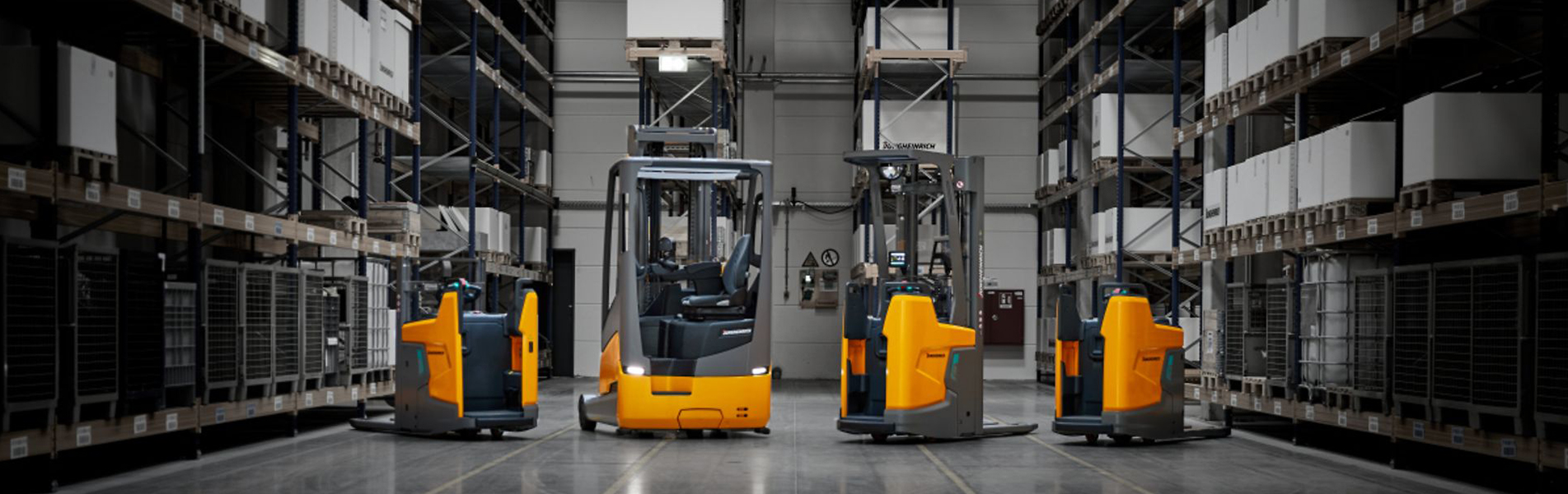
Choosing between a custom electric forklift and a standard forklift depends on how closely the equipment matches your actual material handling requirements. For routine pallet handling in a warehouse with standard aisle widths, load sizes, and working conditions, a standard electric forklift is often the more economical choice. For operations involving unusual loads, restricted spaces, special environments, or non-standard handling processes, a custom electric forklift can offer better operational efficiency, safety, and long-term value.
The main difference is flexibility: a standard forklift is designed for common material handling tasks, while a custom electric forklift is configured around a specific application. Customization may involve vehicle dimensions, lifting capacity, mast height, battery system, forks, attachments, steering, tires, operator position, or environmental protection.
For warehouse operators, manufacturers, logistics companies, and industrial buyers, the right choice should be based on load requirements, facility layout, operating hours, handling frequency, total ownership cost, and the limitations of existing equipment. Bespoke Forklifts provides both standard electric forklift models and customized material handling solutions for specialized industrial applications.

Custom electric forklifts can be configured to match specific load dimensions, workplace layouts, and industrial handling requirements.
A standard electric forklift typically comes with predefined specifications, while a custom electric forklift allows selected features to be modified to meet the customer's application. The difference is not simply whether the machine is electric; both options can use electric power. The real distinction lies in the level of engineering flexibility and how well the equipment matches the working conditions.
| Comparison Factor | Standard Electric Forklift | Custom Electric Forklift |
|---|---|---|
| Design | Predefined configuration | Application-specific configuration |
| Load handling | Standard pallets and typical loads | Irregular, oversized, long, heavy, or specialized loads |
| Vehicle dimensions | Fixed chassis and body dimensions | Can be designed or modified for specific space constraints |
| Attachments | Common attachment options | Special forks, clamps, cradles, platforms, or integrated functions |
| Working environment | General warehouse or industrial use | Cold storage, corrosive environments, low clearance, or special conditions |
| Purchase cost | Usually lower initial cost | May require additional engineering and manufacturing investment |
| Delivery | Usually faster if stock or standard production is available | Depends on design approval, components, and production requirements |
| Operational fit | Suitable for common handling requirements | Designed to address specific operational limitations |
A standard forklift is not necessarily less capable or less reliable. In many facilities, standard equipment is the most practical solution. Customization becomes valuable when the standard configuration creates recurring compromises, such as inefficient turning, repeated load repositioning, poor access, or unsuitable handling equipment.
A standard electric forklift is often the better investment when the material handling process is straightforward and the available equipment already meets the operational requirements. There is no need to pay for custom engineering if a standard model can perform the job safely and efficiently.
Standard electric forklifts are commonly suitable for:
For example, a distribution warehouse handling palletized consumer goods with consistent load dimensions may need a forklift with a suitable rated capacity, lifting height, battery runtime, and turning radius. If these requirements are already met by a standard model, customization may add cost without providing a meaningful productivity improvement.
In this situation, a standard electric counterbalance forklift is a practical option for general warehouse and industrial handling. Three-wheel and four-wheel configurations can be considered according to maneuverability, floor conditions, load capacity, and operating space.

Standard electric counterbalance forklifts are suitable for routine pallet transport, loading, unloading, and warehouse operations.
A custom electric forklift becomes a stronger option when the handling task falls outside the capabilities or practical limitations of standard equipment. The need may be related to the load, the building, the operating environment, or the way materials move through the facility.
Typical specialized applications include:
For these applications, the forklift may need more than a different attachment. The chassis dimensions, wheel arrangement, load center, mast, hydraulic system, steering, battery location, and operator position may all affect the final solution.
Bespoke Forklifts offers custom electric forklift solutions for non-standard handling requirements, including customized dimensions, special configurations, and application-oriented equipment options.
The following examples illustrate where customization can address practical material handling challenges. The correct configuration should always be confirmed through engineering review of the actual load and operating conditions.
Steel profiles, timber, pipes, and aluminum extrusions can be difficult to handle with a conventional counterbalance forklift. The length of the load increases the turning space required and may force warehouses to use wider aisles, reducing storage density.
A multi-directional forklift can travel sideways with long loads, reducing the need to turn the truck and material together. This is particularly useful where long products are stored in narrow racks or handled inside production facilities.
For these applications, electric multi-directional forklifts may offer a more suitable handling solution. The vehicle can be configured according to load length, capacity, aisle dimensions, operator position, and working conditions.
Some factories and warehouses have low doorways, overhead pipes, mezzanines, or restricted turning space. A standard forklift may have sufficient lifting capacity but still be unable to access the required area.
In these cases, a custom electric forklift may use a compact chassis, shorter overall length, reduced body height, special mast configuration, or modified operator position. These changes must be evaluated together because reducing dimensions can affect battery capacity, stability, turning performance, and lifting capability.
A compact three-wheel forklift may be a suitable starting point for confined spaces. Bespoke Forklifts also offers customized configurations for specific dimensional requirements, including narrow-body and low-clearance applications.
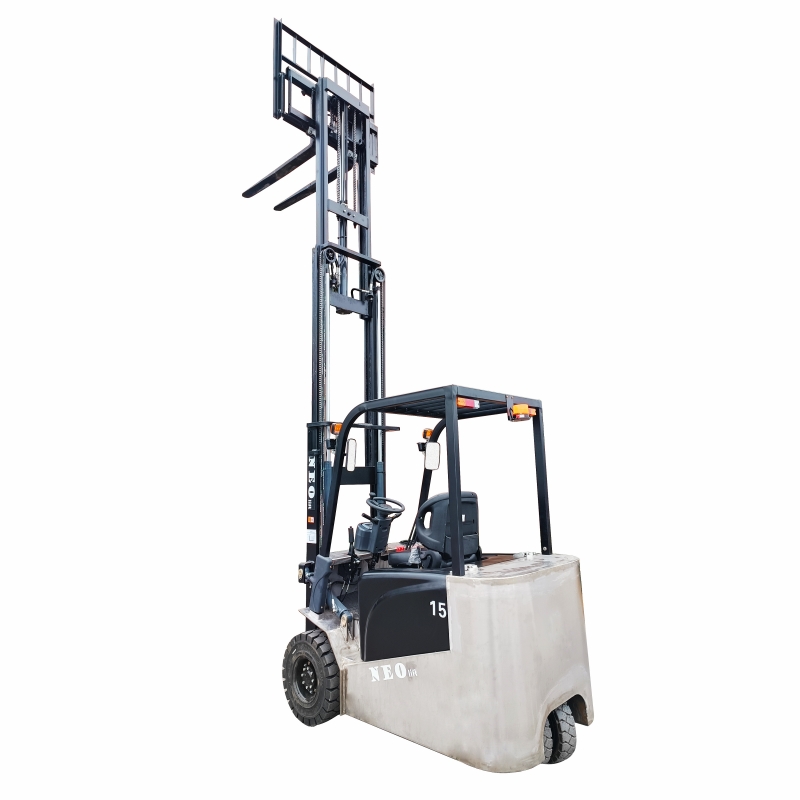
Compact forklift configurations can help address restricted access, low clearance, and specialized lifting requirements.
Cold storage facilities place additional demands on batteries, electrical components, seals, lubricants, tires, and operator comfort. Standard electric forklifts may need specific modifications or equipment options before they can operate reliably in low-temperature environments.
Other facilities may require stainless steel components, corrosion-resistant materials, special electrical protection, or specific safety features. Customization allows the equipment specification to be reviewed against the actual environmental conditions rather than relying on a general-purpose configuration.
For example, Bespoke Forklifts provides stainless steel electric counterbalance forklifts for applications that require corrosion-resistant construction and customized vehicle configurations. The suitability of materials and components should be confirmed according to the customer's environment and maintenance requirements.
Standard electric forklifts generally have a lower initial purchase price because their design, components, and production processes are already established. Custom electric forklifts may involve additional engineering, special components, prototype evaluation, or non-standard manufacturing, which can increase the upfront investment.
However, purchase price alone does not determine the most economical solution. A forklift that requires repeated repositioning, additional equipment, extra operators, or inefficient handling movements may cost more to operate over time than a customized vehicle designed for the same process.
| Cost Factor | Standard Forklift | Custom Forklift |
|---|---|---|
| Initial purchase | Generally lower | May be higher depending on customization |
| Engineering | Usually included in standard model development | May involve additional application-specific design work |
| Productivity | Depends on how well the standard truck matches the task | Potentially improved when customization removes handling bottlenecks |
| Additional equipment | May require separate attachments or another vehicle | Special functions may be integrated into the design |
| Maintenance | Often easier with widely available standard components | Depends on components, customization level, and service planning |
| Downtime | May occur if the truck is not well matched to the application | May be reduced when the configuration addresses the operational problem |
| Long-term value | Strong for routine, predictable operations | Strong when application-specific benefits justify the investment |
For a fair comparison, calculate the total cost of ownership over the expected service period. Include purchase price, energy, battery replacement, maintenance, tires, operator time, downtime, additional equipment, and any changes required to the facility.
A custom electric forklift may justify its higher initial cost if it reduces repeated handling, improves access, eliminates the need for a second vehicle, or makes a previously inefficient process more practical. The actual payback depends on the operation and should be evaluated using measurable data.
One important point for buyers is that electric power and customization are separate decisions. A standard electric forklift can already provide benefits such as reduced local emissions, quieter operation, and suitability for many indoor applications. A custom electric forklift combines those advantages with an application-specific configuration.
For example, a standard electric reach truck may be ideal for palletized goods in a warehouse. If the facility has double-deep racks, unusual pallet dimensions, restricted aisle widths, or a specific operator workflow, a customized reach truck configuration may be worth evaluating.
Battery selection also needs to match the duty cycle. Consider:
For warehouse storage applications, electric reach trucks can be an efficient option. Depending on the warehouse layout, stand-on, seated, or double-deep configurations may be considered, with customization available for specific requirements.
The right equipment depends on the task rather than whether the truck is labeled standard or custom. The following table provides a practical starting point for equipment selection.
| Application | Recommended Starting Point | When Customization Is Needed |
|---|---|---|
| Standard pallet warehouse | Standard electric counterbalance forklift | Special capacity, mast, or battery requirements |
| High-density storage | Reach truck or VNA forklift | Restricted aisle width, special rack access, or non-standard pallet dimensions |
| Long materials | Multi-directional forklift | Special load lengths, weight distribution, or handling attachments |
| Steel coils and cable reels | Coil truck or specialized handling vehicle | Load-specific cradle, support, dimensions, and capacity |
| Cold storage | Electric forklift with cold-storage configuration | Battery heating, cold-resistant components, seals, and operator protection |
| Low-clearance facility | Compact forklift | Custom body height, mast height, or vehicle dimensions |
| Heavy industrial handling | Heavy-duty forklift or specialized carrier | High capacity, special support structure, or integrated handling functions |
For facilities handling long materials, multi-directional forklift configurations can reduce the space required to maneuver long loads. For high-density storage, a very narrow aisle forklift may be a more appropriate choice. For heavy horizontal movement, a dedicated platform truck or towing tractor may be more efficient than a conventional forklift.
Before requesting a quotation, review the current material handling process and identify where equipment limitations affect productivity, safety, or operating cost.
Use the following decision checklist:
If most requirements fall within standard specifications, a standard forklift is likely to be the more straightforward purchase. If several requirements cannot be met by existing models, a customized solution should be evaluated before committing to equipment that may create operational limitations.
Customization is not simply changing the appearance of a forklift or adding a longer fork. The manufacturer needs to understand the application, evaluate the load and operating conditions, and confirm that the proposed configuration can work safely and reliably.
When evaluating a custom electric forklift manufacturer, buyers should review:
Bespoke Forklifts provides standard and customized equipment across several material handling categories, including electric counterbalance forklifts, reach trucks, multi-directional forklifts, heavy-duty pallet trucks, coil trucks, platform trucks, and towing tractors.
For buyers who have a specific application but are not sure which equipment type is suitable, the customized material handling equipment range provides a starting point for evaluating alternative handling solutions beyond conventional forklifts.
A standard electric forklift is generally the better choice for routine warehouse operations with predictable loads, conventional layouts, and readily available equipment specifications. It offers a simpler purchasing process and may have a lower initial cost.
A custom electric forklift is worth considering when standard equipment cannot meet the actual requirements of the load, workspace, environment, or material handling process. The investment can make sense when the customized design solves a specific operational problem and delivers measurable benefits over its service life.
For industrial buyers, the most effective decision is to compare the complete application rather than compare forklift prices alone. Load dimensions, aisle width, lifting height, duty cycle, battery requirements, handling method, safety, and maintenance should all be considered before selecting the equipment.
Need help deciding whether a standard electric forklift or a custom solution is right for your operation? Share your load specifications, facility layout, working environment, and handling process with Bespoke Forklifts. The team can review your requirements and help identify a suitable material handling configuration.
Contact Bespoke Forklifts for an application-specific forklift recommendation.
What is the difference between a custom electric forklift and a standard electric forklift?
A standard electric forklift uses a predefined configuration designed for common material handling applications. A custom electric forklift is adapted or engineered to meet specific requirements such as load dimensions, vehicle size, lifting height, steering, attachments, battery system, or working environment.
Is a custom electric forklift more expensive than a standard forklift?
Usually, a custom forklift may cost more initially because of engineering work, specialized components, and non-standard manufacturing. However, total cost should also include productivity, downtime, additional equipment, operator time, and maintenance. Customization may offer better long-term value if it solves a costly operational problem.
When should I choose a standard electric forklift?
Choose a standard electric forklift when your loads are palletized and predictable, the required capacity and lift height are available, the aisle and turning space are sufficient, and the operating environment does not require special modifications. Standard models are often suitable for warehouses, distribution centers, and routine factory handling.
What applications require a custom electric forklift?
Custom electric forklifts may be required for handling long materials, heavy coils, cable drums, oversized components, restricted-space operations, low-clearance facilities, cold storage, corrosive environments, or specialized production workflows. The required configuration depends on the load and operating conditions.
Can a standard electric forklift be customized later?
Some modifications and attachments can be added to a standard forklift, but changes affecting capacity, load center, stability, structural strength, hydraulic performance, or safety must be reviewed and approved by a qualified manufacturer or engineering professional. Not every standard model can be modified for every application.
Are custom electric forklifts suitable for warehouse operations?
Yes. Customized electric forklifts can be designed for warehouse applications involving narrow aisles, unusual pallet dimensions, high lifting requirements, special rack layouts, cold storage, or restricted access. However, a standard reach truck or counterbalance forklift may be sufficient if it already meets the facility's requirements.
How do I compare the total cost of a custom forklift and a standard forklift?
Compare purchase price, energy consumption, battery costs, maintenance, spare parts, operator time, downtime, additional handling equipment, and expected service life. If customization reduces handling steps, eliminates equipment duplication, or improves workflow, those savings should be included in the comparison.
Can Bespoke Forklifts supply both standard and custom electric forklifts?
Yes. Bespoke Forklifts provides standard electric forklifts and customized material handling solutions, including electric counterbalance forklifts, reach trucks, multi-directional forklifts, heavy-duty pallet trucks, coil trucks, and other specialized equipment. Customers can submit their application details for equipment selection and customization evaluation.
Zon-Cho Huge location near you