Not every material handling job can be completed efficiently with a standard forklift. Unusual load dimensions, limited aisle space, low overhead clearance, high lifting requirements, specialized working environments, or a unique production process may call for a machine designed around the actual application.
Custom forklift design starts with the load and the working environment, not simply the rated capacity. A suitable forklift configuration should consider load weight, dimensions, center of gravity, lifting height, travel distance, aisle width, floor conditions, operating hours, power source, attachments, and safety requirements. These factors determine whether a standard forklift can be modified or whether a purpose-built material handling vehicle is the better solution.
As a custom forklift manufacturer, Bespoke Forklifts provides application-oriented material handling equipment for warehouses, manufacturing facilities, logistics operations, metal processing, cable production, and other specialized industries. The objective is to develop a forklift that fits the customer's workflow, improves handling efficiency, and meets the practical requirements of the operating site.

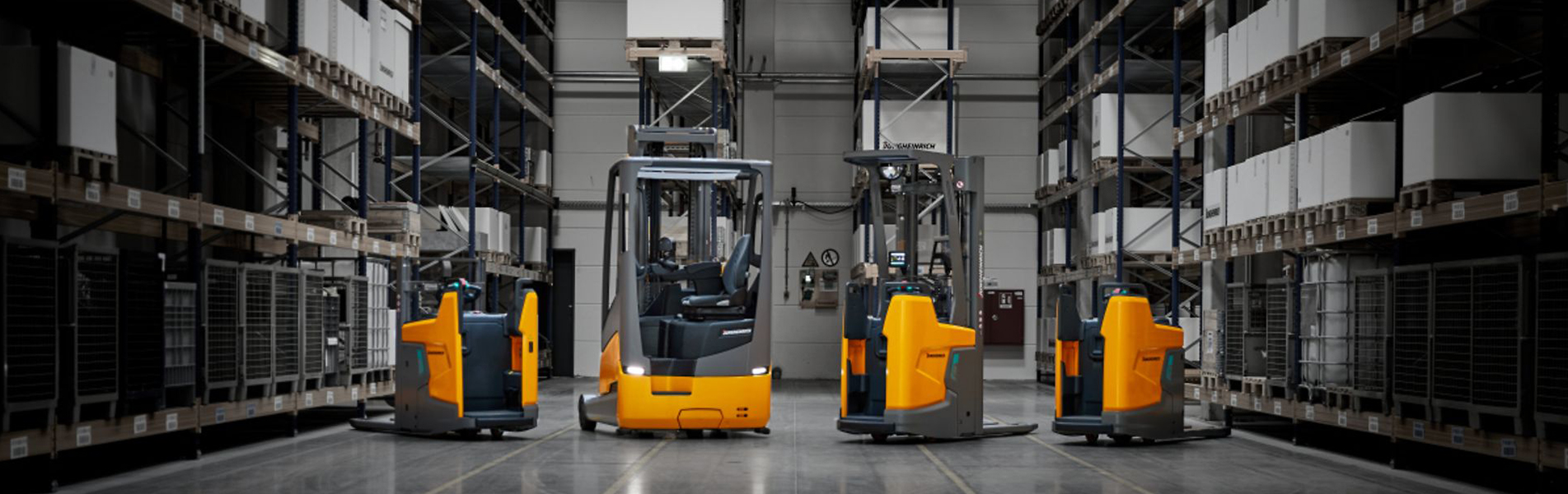
A customized forklift configuration can be developed around load characteristics, working space, and specific material handling requirements.
A standard forklift is usually the practical choice when loads, pallets, operating routes, and working conditions fall within normal specifications. Customization becomes worth considering when operators repeatedly encounter limitations that reduce productivity or create handling risks.
Typical reasons for requesting a custom forklift include:
For example, a factory handling long steel profiles may need a forklift that travels sideways, while a cable manufacturer may require a V-shaped support structure to transport heavy coils. A warehouse with limited aisle space may benefit more from a compact body and specialized steering than from simply increasing the forklift's rated capacity.
The first step is to identify the bottleneck in the current operation. A custom forklift should solve a measurable handling problem rather than add features that operators rarely use.
Load information is the foundation of forklift engineering. The maximum load weight is important, but it is not enough to determine the correct truck. Load length, width, height, shape, weight distribution, lifting points, and center of gravity all affect stability and equipment selection.
Before contacting a custom forklift manufacturer, prepare the following information:
| Load Information | Why It Matters |
|---|---|
| Maximum and typical weight | Determines capacity requirements and structural design. |
| Length, width, and height | Influences fork dimensions, vehicle width, maneuvering space, and load support. |
| Center of gravity | Affects load moment, stability, and rated capacity. |
| Load shape and lifting points | Helps determine whether forks, clamps, cradles, jibs, or special supports are required. |
| Packaging and surface | Identifies potential damage risks and the appropriate contact method. |
| Load variation | Determines whether adjustable forks or flexible handling equipment are needed. |
Consider a customer transporting steel coils. A coil may weigh several tons, but its diameter, width, bore size, and orientation during transport are equally important. A V-shaped support may keep the coil centered and prevent rolling, while the vehicle chassis and wheelbase need to be engineered for the load distribution.
For oversized or non-palletized materials, a conventional forklift with longer forks is not always the safest or most efficient solution. Bespoke Forklifts offers customized material handling equipment for applications involving heavy coils, oversized loads, and special transport requirements.
A forklift's overall dimensions can determine whether it works smoothly in a facility. A machine that handles the load perfectly may still be unsuitable if it cannot turn inside the warehouse, pass through a doorway, access a loading dock, or position goods beside a production line.
Measure the complete operating area, including:
For a narrow warehouse, a compact three-wheel forklift, reach truck, or very narrow aisle forklift may be a better starting point than a conventional four-wheel truck. Where the aisle width is particularly restricted, steering geometry, mast design, guidance systems, and load positioning need to be considered together.
For high-density storage operations, a very narrow aisle forklift can help reduce aisle space and improve warehouse storage utilization. The final selection depends on rack layout, pallet dimensions, lift height, floor quality, and the way operators access each storage position.
The forklift architecture should follow the handling task. Different chassis layouts, steering systems, mast configurations, and wheel arrangements offer different advantages. Choosing the right platform early can avoid unnecessary redesign later.
| Application | Potential Equipment Direction | Design Focus |
|---|---|---|
| General pallet handling | Counterbalance forklift | Capacity, fork configuration, turning radius, and working height |
| Narrow warehouse aisles | Reach truck or VNA forklift | Aisle width, rack access, mast height, and guidance |
| Long steel, timber, or profiles | Multi-directional forklift or side loader | Sideways travel, load length, and aisle clearance |
| Coils and cylindrical materials | Coil truck or specialized forklift | Cradle shape, coil diameter, load stability, and transport orientation |
| Heavy machinery and oversized components | Heavy-duty forklift or platform truck | Structural strength, ground conditions, transport route, and braking |
| Repeated movement of trailers or carts | Electric towing tractor | Drawbar load, towing capacity, route, and trailer connection |
For long materials, multi-directional steering can be particularly useful because the forklift can travel sideways instead of turning the entire load through a narrow aisle. This reduces the space needed for maneuvering and can improve storage efficiency.
Bespoke Forklifts supplies electric and diesel multi-directional forklifts for handling long products such as metal profiles, pipes, timber, and other bulky materials. Depending on the application, the design may include narrow-body or wide-body configurations, different operator positions, and customized handling features.
Lift height should be based on the highest working position, not simply the height of the warehouse rack. The forklift must also consider load capacity at height, mast lowered height, free lift, overhead clearance, and visibility during operation.
When specifying the mast, confirm:
For example, a warehouse forklift may need to lift pallets to a high rack while passing through a low doorway. A mast that provides sufficient lift height but exceeds the doorway clearance would not work. The manufacturer needs to balance the mast structure, collapsed height, and required lifting performance.
For warehouses handling high racks and restricted aisle widths, electric reach trucks can be considered for the application. Reach truck configurations, including stand-on, seated, and double-deep options, should be evaluated against rack layout and load handling frequency.
The choice between electric, diesel, LPG, or another power configuration depends on the operating environment, energy availability, working hours, travel distance, load intensity, and maintenance expectations.
For indoor warehouse applications, electric forklifts are often preferred because they produce no exhaust emissions at the point of operation and typically operate with lower noise. Battery capacity, charging strategy, battery compartment dimensions, and charging infrastructure must still be matched to the work schedule.
For outdoor heavy-duty operations, diesel forklifts may be appropriate where long operating hours, uneven terrain, heavy loads, or refueling flexibility are important. The design may need pneumatic tires, greater ground clearance, weather protection, and a suitable cooling system.
| Operating Condition | Power System Consideration |
|---|---|
| Indoor warehouse, one shift | Battery capacity matched to daily energy demand and charging time |
| Multi-shift operation | Battery size, opportunity charging, charger capacity, and battery replacement strategy |
| Cold storage | Battery performance in low temperatures, heating options, and cold-resistant components |
| Outdoor heavy-duty handling | Engine or motor power, traction, cooling, tires, and weather protection |
| Long-distance factory transport | Energy consumption, towing or payload requirements, route gradients, and operating time |
Battery selection should not be based on rated voltage alone. A custom electric forklift needs sufficient usable energy for its workload, while the battery's dimensions and weight may also affect vehicle layout and stability. Charger compatibility, charging location, and operator routines are part of the overall design.
Attachments can make a forklift suitable for a specialized job, but they also affect the vehicle's capacity, load center, hydraulic requirements, visibility, and overall stability. The attachment should be included in the original design rather than added after delivery without engineering review.
Common attachment and function requirements include:
When specifying an attachment, provide the load type, attachment weight, required opening range, gripping force if applicable, hydraulic flow and pressure requirements, and any operating sequence. The final capacity must be verified for the complete forklift and attachment configuration.
A customized forklift may also require different control layouts, cameras, lighting, warning devices, operator protection, or access features. These should be selected based on the task and risk assessment rather than added as a generic checklist.
A well-designed custom forklift should improve the handling process without creating new operating risks. Safety considerations need to be included from the beginning, especially when the vehicle has an unusual load shape, modified chassis, special attachments, or a non-standard operating route.
The design review should consider:
Ergonomics can directly affect productivity. If operators repeatedly enter and exit the truck, perform frequent reversing, or work with loads that obstruct forward visibility, the operator position and control arrangement should be reviewed. Cameras, mirrors, adjustable controls, and suitable seating may help address specific operational issues when properly selected.
For cold storage, food processing, chemical environments, or areas with strict cleanliness requirements, materials, seals, lubricants, tires, and electrical components may need special consideration. In these cases, the design should reflect the actual exposure conditions and required maintenance practices.
Forklift design should not focus on one lifting movement in isolation. The complete process includes picking up the load, traveling, turning, positioning, lifting, unloading, returning, and sometimes transferring the load to another piece of equipment.
A useful application review asks:
In some factories, the best solution is not a forklift with a larger capacity. A dedicated coil truck, heavy-duty platform truck, or electric towing tractor may move materials more efficiently because it is designed for the transport stage of the process.
For repeated movement of heavy loads over a defined route, a heavy-duty electric towing tractor may provide an alternative to individual forklift trips. The selection depends on trailer design, towing weight, route conditions, turning space, and how loads are transferred at each end.
A structured design process helps customers and manufacturers avoid specification gaps, unnecessary changes, and misunderstandings before production.
| Stage | Typical Work | Customer Input |
|---|---|---|
| Application review | Identify handling challenges and evaluate equipment direction. | Load details, workflow, photos, and videos |
| Technical specification | Define capacity, dimensions, mast, power, tires, and attachments. | Measurements, operating hours, and performance targets |
| Engineering proposal | Develop the proposed configuration and identify technical limitations. | Review and confirmation of the proposed solution |
| Quotation and confirmation | Confirm scope, price, delivery, specifications, and commercial terms. | Purchase requirements and final approval |
| Manufacturing and inspection | Build, test, inspect, and verify the agreed configuration. | Inspection criteria and acceptance requirements |
| Delivery and support | Prepare shipment, documents, manuals, and service support. | Delivery location, unloading arrangements, and training needs |
Clear technical communication is particularly important for overseas custom forklift projects. Photos, drawings, marked-up floor plans, load dimensions, and short operating videos can help a manufacturer understand the application before preparing a proposal.
A detailed request for quotation (RFQ) gives the manufacturer a more accurate basis for recommending a configuration and estimating cost. It also helps buyers compare quotations on a like-for-like basis.
Before sending an RFQ, prepare the following information:
Where possible, include photographs of the load, the operating area, and the existing equipment. A drawing with dimensions is especially useful when the forklift must pass through a restricted opening or work alongside a production line.
For a project-specific recommendation, buyers can send their requirements directly through the Bespoke Forklifts contact page to discuss the proposed application and equipment configuration.
What is a custom forklift?
A custom forklift is a material handling vehicle configured or engineered to meet specific load, workplace, performance, or operating requirements that may not be fully addressed by a standard forklift. Customization may involve vehicle dimensions, capacity, mast, forks, attachments, steering, power system, operator position, or environmental protection.
How do I know if I need a custom forklift or a standard model?
A standard forklift may be suitable if your load dimensions, lifting height, aisle width, working environment, and handling process match an available model. Customization is worth evaluating when a standard truck cannot safely handle the load, fit the site, reach the required position, or perform the handling process efficiently.
What information is required to design a custom forklift?
Manufacturers generally need load weight, dimensions, center of gravity, lifting height, operating aisle width, travel route, floor conditions, working hours, power preferences, attachment requirements, and applicable safety standards. Photos, drawings, and videos of the application can help clarify the requirements.
Can a forklift be customized for narrow aisles or low-clearance areas?
Yes. Depending on the application, customization may include a narrower chassis, compact counterweight, shorter overall length, special mast configuration, reduced lowered height, or a different steering system. The manufacturer must verify turning space, load stability, and capacity before confirming the design.
Can a custom forklift handle long materials such as steel profiles or timber?
Yes. Multi-directional forklifts and side-loading equipment are commonly considered for long materials because sideways travel can reduce maneuvering space. The suitable configuration depends on load length, weight, aisle width, storage arrangement, and the required lifting height.
Can a custom forklift be designed for coils, cable drums, or other special loads?
Yes. Specialized material handling equipment may use V-shaped supports, cradles, clamps, drum attachments, or other load-specific structures. The support design must match the load shape, dimensions, weight distribution, and handling orientation. The complete vehicle must be rated for the intended load.
Does adding an attachment reduce forklift lifting capacity?
It can. An attachment adds weight and may move the load center farther forward, affecting the forklift's rated capacity and stability. The capacity of the complete truck, attachment, and load configuration must be verified by the manufacturer, and the appropriate capacity information must be provided.
How long does it take to manufacture a custom forklift?
Lead time depends on the complexity of the design, component availability, engineering requirements, production schedule, testing, and shipping arrangements. A manufacturer should provide a project-specific delivery estimate after reviewing and confirming the technical specifications.
How much does a custom forklift cost?
The cost depends on rated capacity, vehicle dimensions, lifting height, power system, attachments, specialized components, safety features, manufacturing requirements, and quantity. A detailed application specification is the best way to obtain a meaningful quotation rather than a generic price estimate.
Can Bespoke Forklifts provide a customized forklift solution for my application?
Bespoke Forklifts offers customized material handling solutions for specialized applications, including electric forklifts, multi-directional forklifts, heavy-duty pallet trucks, coil trucks, platform trucks, and other equipment. Customers can provide their load details, site dimensions, and operating requirements for a project-specific evaluation.
Looking for a forklift designed around your actual working conditions? Share your load specifications, warehouse layout, operating environment, and handling process with Bespoke Forklifts. A clear application brief helps the engineering team evaluate the appropriate vehicle type and customized configuration for your project.
Contact Bespoke Forklifts to discuss your custom forklift requirements.
Zon-Cho Huge location near you