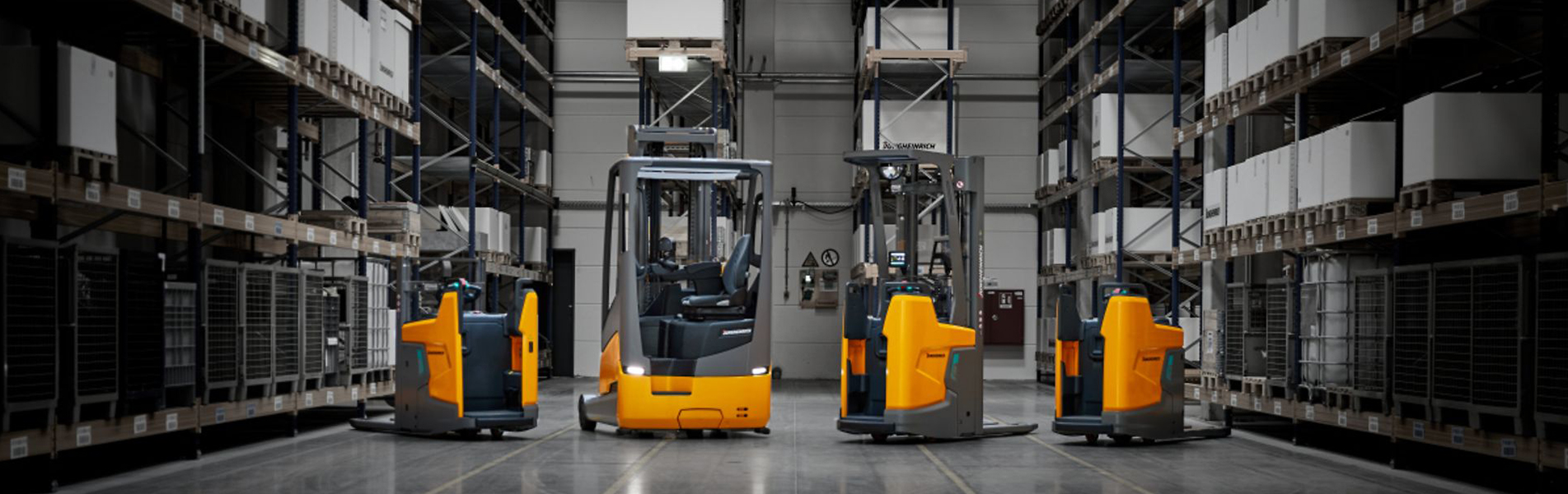
Designing a forklift for a narrow aisle warehouse requires more than reducing the overall width of a standard truck. The vehicle must be engineered around the available aisle space, pallet dimensions, load capacity, lifting height, steering requirements, and warehouse operating conditions. A well-designed narrow aisle forklift allows operators to move and stack materials safely while making better use of limited warehouse floor space.
For warehouse operators planning a high-density storage system, the most important decision is choosing the right forklift configuration before finalizing the rack layout. Depending on the application, a stand-on VNA forklift, seated VNA forklift, man-up forklift, or electric articulated forklift may provide the right balance between maneuverability, lifting performance, and storage capacity.
As a manufacturer of customized material handling equipment, Bespoke Forklifts provides different narrow aisle forklift configurations for warehouse storage, logistics, manufacturing, food processing, and other industrial applications. This guide explains how to design a forklift for narrow aisle warehouses, from the initial measurements to the final equipment configuration.
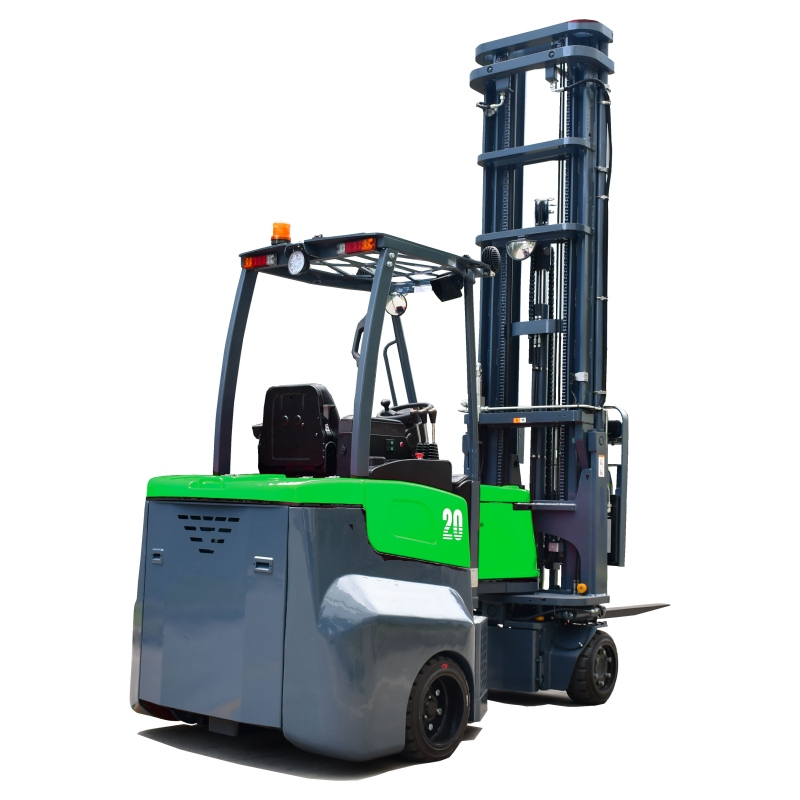
Electric VNA forklift for high-density warehouse storage.
A narrow aisle forklift is a specialized material handling vehicle designed to operate in warehouse aisles that are too restricted for conventional counterbalance forklifts. Its compact structure, specialized steering system, and optimized mast configuration allow operators to access pallet racks with less maneuvering space.
Unlike a conventional forklift, which generally needs to turn its entire body to position a load, some VNA forklifts use three-way fork rotation or side-shifting mechanisms. These systems allow the forks to reach the left, right, or front storage positions without requiring the truck to turn inside the aisle.
Narrow aisle forklifts are commonly used in:
The appropriate forklift depends on the warehouse layout, pallet type, load characteristics, storage height, and picking frequency. A narrow aisle design should always be evaluated as part of the complete warehouse material handling system.
Aisle width is one of the most important factors when designing a forklift for a narrow aisle warehouse. It determines how much space the vehicle has to travel, position pallets, and access storage racks.
Before selecting a forklift, warehouse planners should measure the minimum aisle width, rack depth, pallet dimensions, turning areas, and available clearance around the storage system.
The following table provides a general reference for matching warehouse aisle layouts with forklift types. These figures are preliminary planning ranges rather than guaranteed operating requirements. The final aisle width must be calculated using the selected truck's specifications, pallet dimensions, and rack configuration.
| Warehouse Type | Typical Aisle Width | Suitable Forklift |
|---|---|---|
| Conventional warehouse | 3.6–4.0 m | Counterbalance forklift |
| Narrow aisle warehouse | 2.5–3.0 m | Reach truck |
| Very narrow aisle warehouse | Below 2.0 m in suitable configurations | VNA or articulated forklift |
For example, a warehouse with long, straight aisles and high-level pallet racks may benefit from a dedicated VNA forklift. A facility with changing storage layouts or mixed indoor and outdoor operations may require an articulated forklift with greater maneuverability.
It is also important to measure the turning space at aisle entrances and intersections. A forklift that can travel through a narrow aisle may still struggle to enter it if the approach area is too restricted.
Forklift capacity should be calculated according to the actual load being handled, not simply the average weight of warehouse inventory.
Engineers need to consider several load-related measurements:
For example, a warehouse handling standard 1,000 kg pallets has different requirements from a facility moving 1,600 kg loads at high lifting positions.
Load capacity also changes with lifting height, load center, mast configuration, and attachments. The rated capacity must therefore be verified using the manufacturer's load chart for the actual operating configuration.
For applications involving unusual pallet sizes or specialized materials, a customized forklift configuration may be more suitable than a standard warehouse truck.
The forklift's structural design determines how effectively it can maneuver in restricted warehouse spaces. Different narrow aisle applications require different vehicle configurations.
Stand-on VNA forklift
A stand-on VNA forklift is suitable for high-density warehouse operations where compact vehicle dimensions and frequent pallet handling are important. Depending on the configuration, its fork rotation and side-shifting mechanism can allow pallets to be handled on both sides of the aisle without turning the entire truck.
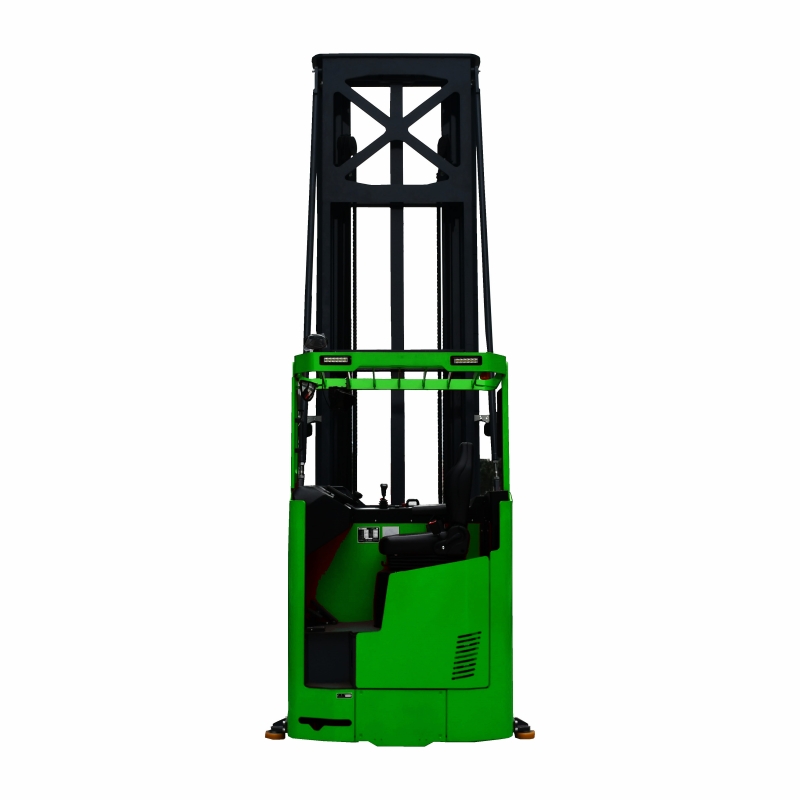
Stand-on VNA forklift configuration for restricted warehouse aisles.
Seated VNA forklift
A seated VNA forklift is designed for operators who prefer a seated driving position during warehouse operations. It can combine three-way pallet handling, fork rotation, and side shifting with a compact vehicle structure.
Bespoke Forklifts' NVS series, for example, features a rated capacity of 1,600 kg and a lifting height range of 3 to 12 meters. Its 180-degree fork rotation and left-right side-shifting functions support high-level pallet handling in narrow aisle storage environments.
Man-up VNA forklift
A man-up forklift raises the operator together with the lifting platform or operator compartment. This configuration can support both pallet handling and high-level order picking, making it useful for warehouses that combine storage and picking operations.
The NVM16 model listed by Bespoke Forklifts has a rated capacity of 1,600 kg and a maximum lifting height of 14.5 meters. Its three-way fork operation allows loading, unloading, and stacking at the left, right, and front positions without turning the vehicle body.
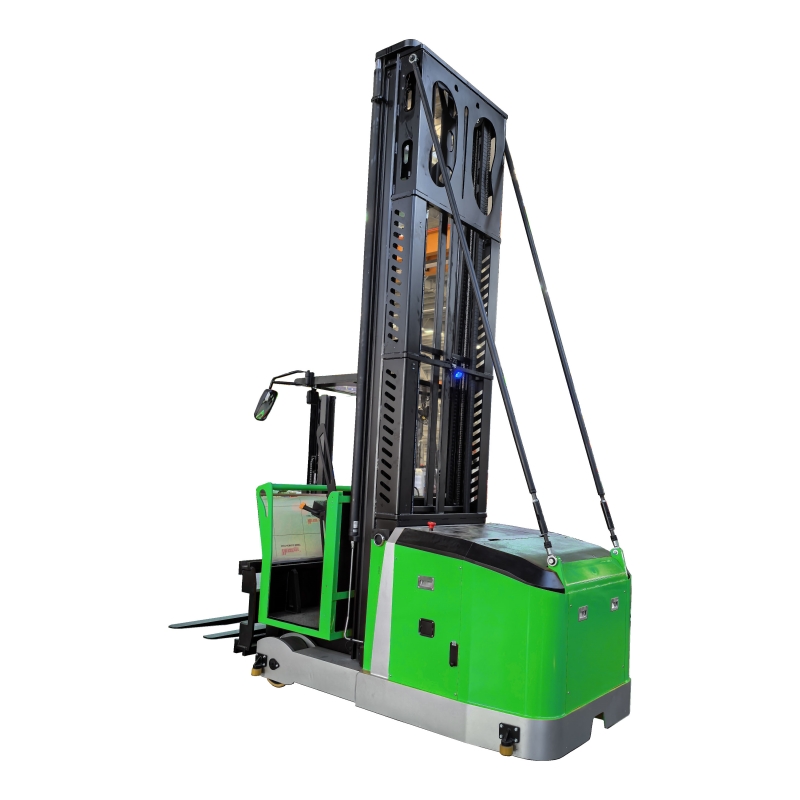
Man-up electric VNA forklift for high-level warehouse applications.
Electric articulated forklift
An articulated forklift uses a pivoting chassis and specialized steering geometry to maneuver in restricted spaces. It is particularly useful when warehouses need to handle pallets in narrow aisles while retaining flexibility for other material handling tasks.
Bespoke Forklifts offers an electric articulated forklift with a rated capacity range of 1.5 to 3 tons and a maximum lifting height of 12.5 meters. This type of equipment can be considered for warehouses that require a combination of indoor storage and outdoor material handling.
Explore the Very Narrow Aisle Forklift range to compare different configurations for high-density warehouse operations.
A narrow aisle forklift must be designed to reach the highest storage level without compromising stability, visibility, or operating safety.
When selecting the mast, engineers should evaluate:
For high-bay warehouses, a multi-stage mast may be necessary to achieve the required lifting height while maintaining a suitable collapsed height.
However, a higher mast does not automatically mean better warehouse performance. As the lifting height increases, the truck's residual capacity, mast deflection, and overall stability become increasingly important.
For example, Bespoke Forklifts' electric articulated forklift offers a maximum lifting height of 12.5 meters, while its NVM16 man-up VNA model reaches up to 14.5 meters. These specifications demonstrate how different forklift structures can serve different warehouse storage requirements.
Reducing forklift dimensions can help improve maneuverability, but the design must maintain sufficient structural strength and operating stability.
The main dimensions that should be evaluated include:
| Design Parameter | Design Consideration |
|---|---|
| Overall width | Must fit the aisle and rack clearance requirements. |
| Overall length | Affects turning space and maneuverability. |
| Wheelbase | Influences stability, turning performance, and driving characteristics. |
| Turning radius | Determines the space required for turning and positioning. |
| Mast dimensions | Must meet lifting and overhead clearance requirements. |
| Ground clearance | Must match the floor condition and potential obstacles. |
These dimensions need to be evaluated together rather than independently. For example, reducing the wheelbase may improve turning performance but can also affect load stability and driving behavior.
A well-designed narrow aisle forklift should provide sufficient clearance during normal operation, even when handling the largest specified pallet.
In very narrow aisle warehouses, steering accuracy and positioning control are essential. Even a small deviation can create contact with racks, stored goods, or nearby equipment.
Depending on the warehouse layout, the forklift may use different guidance and positioning technologies.
Wire guidance: An embedded wire or guidance conductor provides a reference path for compatible forklift systems. It is commonly considered for dedicated VNA aisles.
Optical guidance: Optical sensors or visual guidance references help the vehicle follow a defined route. The system depends on suitable floor markings, environmental conditions, and sensor configuration.
Laser guidance: Laser-based systems can help operators identify positioning references and improve accuracy during pallet handling.
Additional safety features may include:
For example, the articulated forklift offered by Bespoke Forklifts includes laser lights that provide operators with a visual reference when stacking goods in very narrow aisles. Its product configuration also includes an OPS function.
The choice of guidance system should be based on the actual warehouse environment, required positioning accuracy, and operating procedures.
Electric forklifts are widely used in indoor narrow aisle warehouses because they operate without local exhaust emissions and can provide controlled, precise movement in restricted spaces.
Battery selection should be based on the warehouse's operating schedule rather than vehicle capacity alone.
Important considerations include:
Lead-acid batteries may be suitable for operations with predictable charging schedules and established battery maintenance procedures. Lithium-ion batteries can be considered for multi-shift operations where opportunity charging and reduced routine battery maintenance are important.
Battery weight and dimensions must also be incorporated into the forklift design because they influence vehicle balance, available installation space, and overall operating performance.
Choosing the correct forklift type depends on the warehouse's storage strategy, operating frequency, lifting requirements, and available aisle space.
The following comparison provides a practical starting point for equipment selection.
| Forklift Type | Main Advantage | Suitable Application |
|---|---|---|
| Stand-on VNA | Compact operator configuration and three-way handling options. | High-density pallet storage. |
| Seated VNA | Seated operation with specialized fork rotation. | High-level warehouse stacking. |
| Man-up VNA | Operator elevation and high-level picking capability. | High-bay storage and order picking. |
| Electric articulated forklift | Articulated steering and flexible handling. | Narrow aisle and mixed indoor/outdoor operations. |
| Reach truck | Fork reach mechanism for pallet access. | Standard narrow aisle warehouses. |
For warehouses that require high-level pallet access and three-way handling, a dedicated Man Up Electric Very Narrow Aisle Forklift may be worth considering.
For facilities with different pallet handling requirements, Bespoke Forklifts also provides Seated Electric VNA Forklifts and other specialized warehouse equipment.
Not every warehouse has the same aisle dimensions, rack structure, pallet specifications, or material handling workflow. In some cases, standard equipment may not fully meet the requirements of the facility.
Custom forklift design allows the equipment to be configured around the actual operating environment.
Depending on the application, customization may involve:
For example, a warehouse handling standard pallets may need a conventional VNA forklift, while a manufacturing facility with unusual load dimensions may require a customized forklift structure.
Bespoke Forklifts focuses on application-oriented material handling solutions. Its product range includes VNA forklifts, electric reach trucks, articulated forklifts, and customized equipment for different industrial handling requirements.
When planning a non-standard vehicle, customers should provide the manufacturer's engineering team with warehouse drawings, aisle measurements, pallet specifications, load weights, required lifting heights, and operating conditions.
Learn more about the available Customized Forklift Solutions for specialized material handling applications.
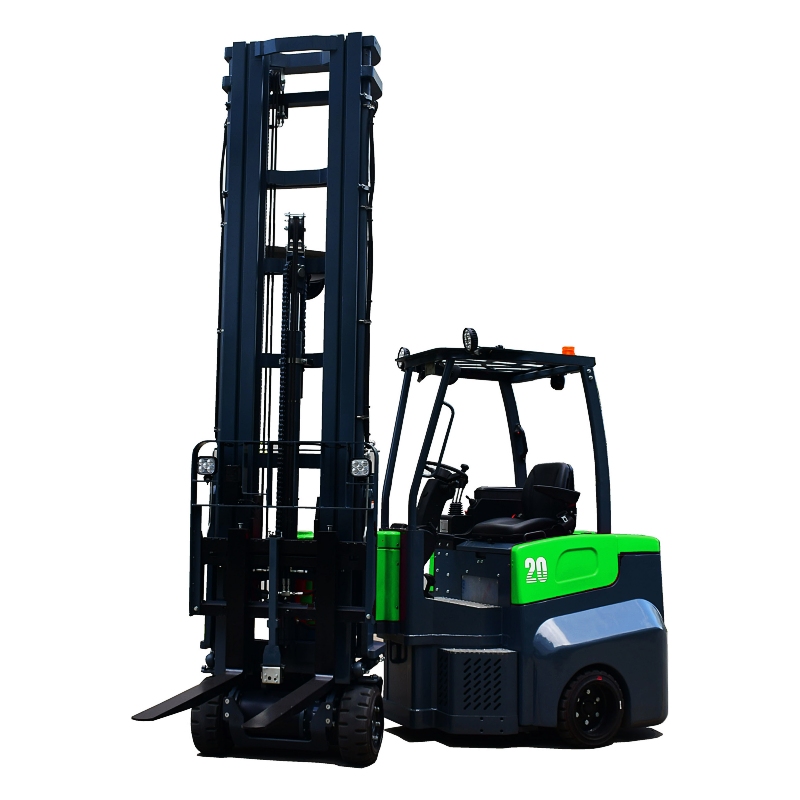
Specialized VNA forklift configuration for warehouse storage applications.
Even when a forklift meets the basic capacity and lifting requirements, an unsuitable design can create operational problems. The following mistakes should be avoided during equipment planning.
Choosing a forklift based only on overall width. A narrow vehicle does not automatically fit every narrow aisle. Turning radius, load dimensions, fork movement, and operating clearance must also be evaluated.
Ignoring residual load capacity. A forklift's rated capacity may decrease when lifting loads to greater heights or using attachments. Always verify the load chart for the intended configuration.
Overlooking floor conditions. Uneven surfaces, floor joints, slopes, and floor load-bearing capacity can affect forklift stability and guidance performance.
Underestimating overhead clearance. The mast must be compatible with warehouse ceilings, beams, lighting, sprinkler systems, and doorways.
Forgetting operator visibility and safety. Narrow aisles leave less room for correction. Camera systems, lighting, speed control, and suitable operator protection should be considered during design.
Failing to coordinate forklift and racking design. The truck, pallet, rack, and warehouse layout should be evaluated as one integrated system. Changing the rack dimensions after purchasing equipment can create avoidable costs.
Selecting a narrow aisle forklift manufacturer is not simply about comparing product specifications. The supplier should understand the relationship between warehouse layout, load characteristics, lifting performance, and equipment configuration.
Bespoke Forklifts, operated by Shanghai Zon-Cho Huge Science and Technology Co., Ltd., provides electric material handling equipment and customized forklift solutions for international customers.
Its narrow aisle product range includes:
The company offers different capacity and lifting configurations for warehouse and industrial applications. Its articulated forklift range includes models from 1.5 to 3 tons, with lifting heights up to 12.5 meters. The NVS16 seated VNA forklift offers a 1,600 kg rated capacity and a maximum lifting height of 12 meters.
With more than 20 years of production and R&D experience in electric material handling equipment, the company can provide application-oriented equipment configurations according to customer requirements.
For warehouse operators who need to improve storage density, handle high-level pallet loads, or work within restricted aisle dimensions, choosing the right equipment configuration is an important step toward more efficient material handling.
Visit BespokeForklifts to learn more about its forklift products and customized material handling solutions.
How do you design a forklift for a narrow aisle warehouse?
Start by measuring the warehouse aisle width, rack dimensions, pallet size, and required lifting height. Then determine the required load capacity, vehicle dimensions, steering system, mast configuration, battery specifications, and safety features. The final forklift configuration should be tested against the actual warehouse operating conditions.
What is the minimum aisle width for a narrow aisle forklift?
There is no universal minimum aisle width for every narrow aisle forklift. Some VNA and articulated forklift configurations can operate in very restricted spaces, but the required aisle width depends on the truck's dimensions, turning geometry, pallet size, rack clearance, and handling method.
What is the difference between a reach truck and a VNA forklift?
A reach truck uses an extending fork mechanism to access pallets without moving the entire vehicle close to the rack. A VNA forklift is designed for very narrow aisle operations and may use specialized three-way fork rotation, side shifting, or articulated steering to access storage positions with limited turning space.
What lifting height can a VNA forklift achieve?
Lifting height depends on the mast and forklift configuration. For example, Bespoke Forklifts offers a seated NVS16 VNA forklift with a maximum lifting height of 12 meters and an NVM16 man-up VNA forklift with a maximum lifting height of 14.5 meters.
Can a forklift be customized for an existing narrow aisle warehouse?
Yes. A forklift can be configured around existing warehouse dimensions, including vehicle width, mast height, steering arrangement, fork specifications, and battery requirements. However, the complete configuration must be checked for stability, capacity, safety, and compatibility with the existing racking system.
Is an electric forklift suitable for narrow aisle warehouses?
Yes. Electric forklifts are widely used in indoor warehouse environments because they produce no local exhaust emissions and offer controllable driving and lifting functions. Battery capacity should be selected according to operating hours, workload, charging opportunities, and warehouse temperature.
What information should I provide when requesting a customized narrow aisle forklift?
Provide the minimum aisle width, pallet dimensions, maximum load weight, load center, required lifting height, warehouse floor conditions, doorway clearance, operating hours, and preferred battery type. Warehouse drawings, photographs, and videos can also help the manufacturer evaluate the application.
Looking for a Forklift Designed for Your Warehouse?
Every narrow aisle warehouse has different handling requirements. Share your warehouse layout, pallet dimensions, load capacity, and lifting height with Bespoke Forklifts to discuss a suitable VNA forklift or customized material handling solution.
Zon-Cho Huge location near you