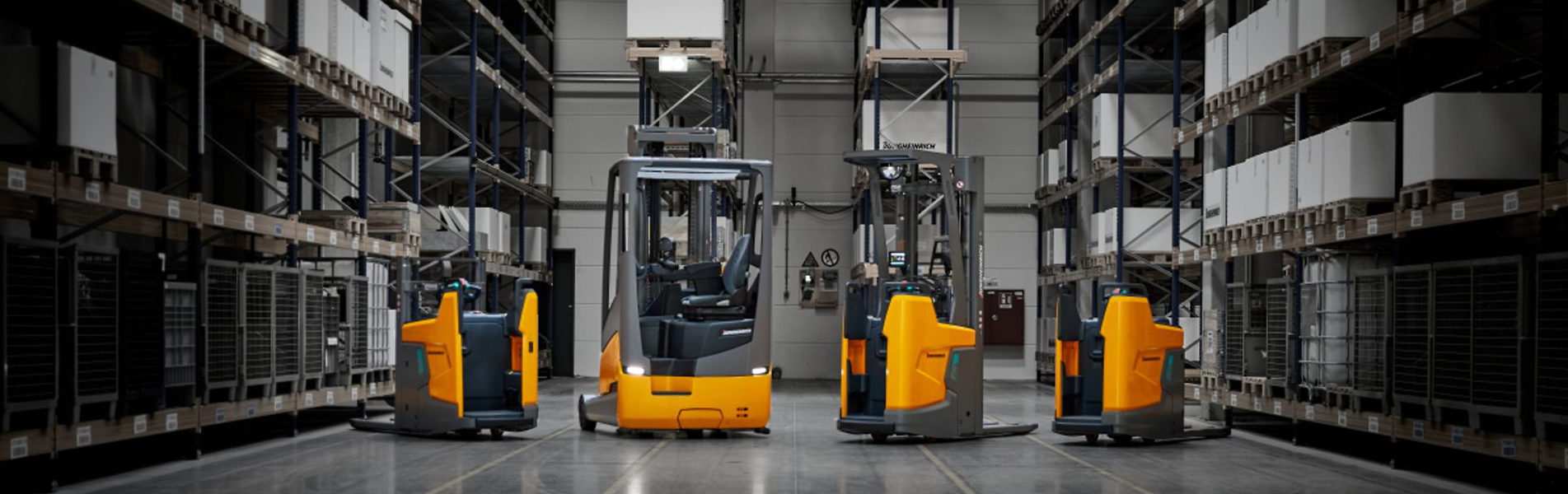
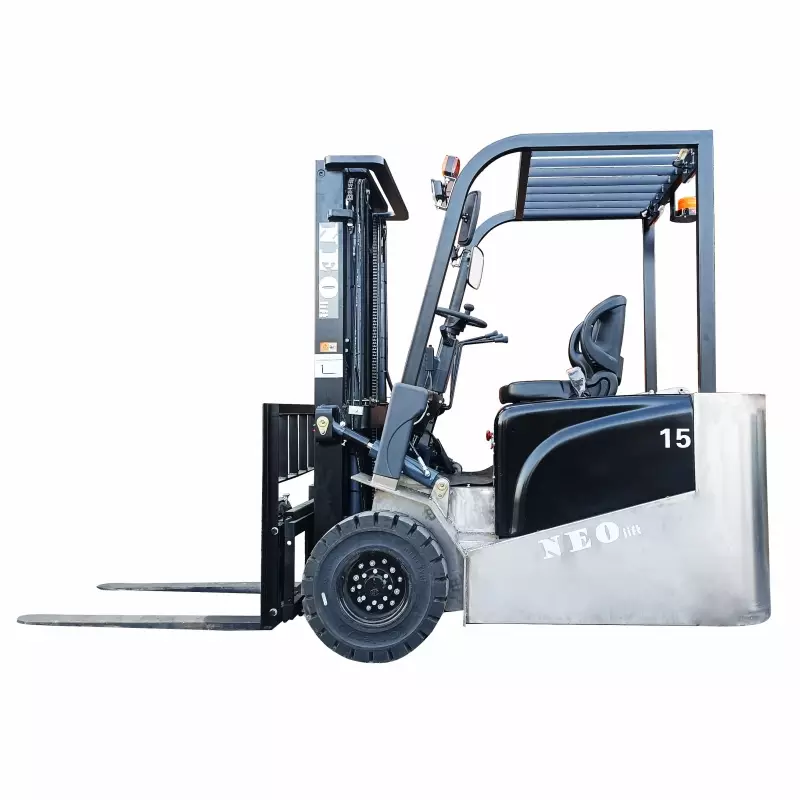
A stainless steel electric forklift is a battery-powered lift truck built with stainless steel instead of standard painted steel. You need one for corrosion resistance, strict hygiene, and frequent washdowns. Food and beverage, pharmaceuticals, chemicals, and cold storage operations rely on these trucks because of sanitation rules, moisture exposure, and chemical handling.
A stainless steel electric forklift resists rust and contamination. It keeps food and drugs safe.
These forklifts produce no exhaust. They are perfect for indoor use in cleanrooms and cold storage.
Food, pharmaceutical, chemical, and cold storage industries need these forklifts. They meet strict hygiene rules.
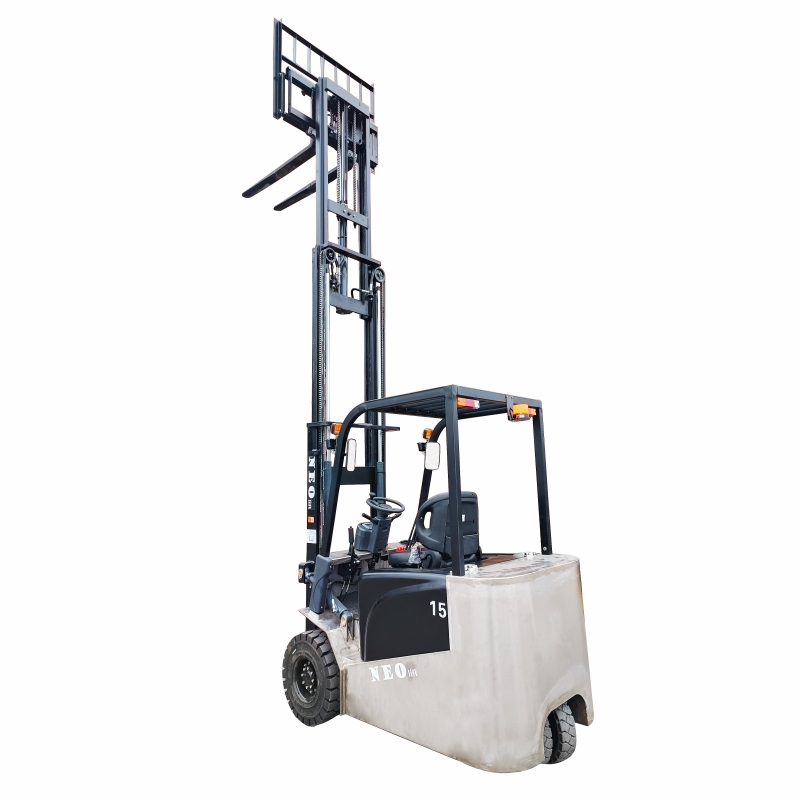
Standard forklifts rely on painted steel that chips, cracks, and delaminates under high-pressure washdown. When paint fails, moisture reaches bare metal, and rust begins immediately. In food processing and chemical plants, that rust creates micro-environments where pathogens like Listeria monocytogenes and Salmonella spp. can persist despite rigorous sanitation. This equipment eliminates that failure mode entirely.
Stainless steel carries a protective oxide layer that resists multiple corrosion types. General corrosion dissolves material uniformly, but the chromium content in stainless steel forms a passive film that halts this process. Pitting corrosion attacks localized spots under acidic conditions with high chloride concentration. Grades with higher chromium, nitrogen, and molybdenum content—measured by the Pitting Resistance Equivalent number (PRE = %Cr + 3.3 × %Mo + 16 × %N)—resist this attack. Crevice corrosion occurs in narrow gaps where corrodent stagnates. Hygienic forklift designs avoid crevices by using continuous-welded joints instead of bolted overlaps. Stress corrosion cracking requires tensile stress, high temperature, and chlorides. Duplex stainless grades resist it better than austenitic types, and ferritic grades remain free of SCC entirely. Galvanic corrosion arises when dissimilar metals contact an electrolyte. Manufacturers isolate components with rubber washers and plastic sleeves to prevent this.
You choose between Type 304 and Type 316 stainless steel based on your environment. Type 304 works well for dry or frequently cleaned indoor equipment, non-aggressive products, and general process-contact surfaces. Type 316 offers higher resistance for chloride-bearing products, salty ingredients, frequent washdown, corrosive process media, and outdoor exposure. Low-carbon L grades such as 304L and 316L suit welded fabrication by preventing intergranular corrosion from carbide precipitation. The smooth, dense surface of both grades has no pores or burrs, preventing dust, oil, and residue from adhering and avoiding bacterial growth.
Design features further prevent contamination buildup. Motors, controllers, batteries, and sensors live within IP65-rated enclosures that block water during washdown. Cable entry points use compression glands rather than open conduits. Wheel assemblies incorporate sealed bearings with food-grade lubricants. Rounded corners and sloped surfaces prevent standing water from collecting. Access panels use hygienic gaskets and quick-release mechanisms for inspection without introducing contamination. Sealed hydraulic systems prevent fluid contamination entirely.
An IP65 minimum ingress protection rating is required for equipment subjected to routine CIP/SIP washdown cycles in ISO-classified cleanrooms. For facilities that use high-pressure guns (50–100 bar) or steam cleaning, IP66 or IP67 is the safer specification. A practical washdown test—spraying the fully assembled unit with a 50-bar jet from 1 meter, targeting every control panel seam and wheel bearing housing, then running three full lift cycles—is recommended before approving any stacker for CIP-cleanroom use.
Internal combustion forklifts run on diesel, propane, or gasoline. They produce exhaust that includes CO2, carbon monoxide, nitrogen oxides, particulate matter, and unburned hydrocarbons. In an enclosed facility, that exhaust creates serious air-quality problems. OSHA records approximately 19 serious CO incidents annually in industrial settings. Indoor IC operation requires roughly 5,000 CFM of air exchange per 60-HP propane forklift to dilute emissions to safe levels. Diesel forklifts are typically restricted to outdoor use entirely.
A stainless steel electric forklift produces zero tailpipe emissions. No CO2, no CO, no NOx, no PM. This makes it safe for enclosed cold rooms, cleanrooms, and food processing areas where combustion residue cannot settle on product surfaces. The comparison becomes stark when you look at the numbers:
|
Emission Metric |
Internal Combustion (Diesel/Propane) Forklift |
Electric Forklift |
|---|---|---|
|
CO2 emissions |
~5,000–8,000 g/hour; up to 16 metric tons/year |
Zero tailpipe emissions |
|
Particulate Matter (PM) |
Emitted soot and metal particles |
None at point of use |
|
Carbon Monoxide (CO) |
Emitted; a poorly tuned propane carburetor can emit 10x the CO of a tuned one |
None |
|
Nitrogen Oxides (NOx) |
Emitted; EPA Tier 4 requires 90% NOx reduction |
None |
|
Hydrocarbons (HC) |
Emitted as unburned fuel forming ground-level ozone |
None |
|
Indoor ventilation need |
~5,000 CFM air exchange per 60-HP propane forklift |
Not required |
Maintenance requirements also differ dramatically. Internal combustion engines have complex fuel, ignition, and exhaust systems. They require oil changes every 250 hours with filters, air and fuel filtration, and spark plugs at 1,000–1,500 hours. Annual scheduled maintenance for a heavy-duty diesel unit runs $2,000–$3,500 or more. Electric forklifts eliminate these activities entirely. With approximately 70% fewer moving parts, you face 40% fewer maintenance interruptions. No engine oil changes, no fuel circuit, no spark ignition service. Shop rates of $150–$200 per hour turn those small repairs into major line items for IC fleets.
Lithium-ion batteries further reduce your maintenance burden. You cannot accidentally overcharge them. They do not require transport to a separate ventilated charging room. They do not need watering to maintain performance. They eliminate equalization charging and the labor that goes with it. Opportunity charging—short, frequent charges during breaks—actually increases battery cycle life, reducing your forklift downtime.
The absence of paint on a stainless steel electric forklift delivers the most immediate benefit. Painted surfaces chip, crack, and delaminate under high-pressure washdown and chemical exposure. Chipped paint creates crevices where food debris and moisture collect, supporting bacterial growth. Standard paint systems degrade within two to three years in food plants, creating hygiene risks and safety hazards. Stainless steel eliminates this entirely. The smooth, non-porous surface prevents adhesion of dust, oil, and residue. It resists cleaning chemicals and high-pressure water without corrosion or deformation.
The material itself is non-toxic, odorless, static-free, and chemically stable. It does not release harmful substances due to wear or corrosion. This directly complies with food GMP and pharmaceutical GSP standards. This matters during HACCP audits. A food plant manager once showed an inspector the rust flakes on the bottom shelf of a cold storage rack—not from the food, but from the forklift mast used to move the food. Equipment that sheds microparticles into a washdown environment becomes a HACCP audit failure waiting to happen.
A stainless steel electric forklift withstands daily high-pressure washdown with food-grade cleaning chemicals. You can spray the fully assembled unit with a 50-bar jet from 1 meter, targeting every control panel seam and wheel bearing housing, then run three full lift cycles without issue. Corrosion resistance translates directly to a longer service life in harsh environments. A Norwegian seafood processor replaced painted units every 14 months due to corrosion from salt-water ice and daily chlorine washdowns. Their stainless steel fleet has been running 22 months with zero corrosion-related downtime.
Certification compliance reinforces these benefits. For pharmaceutical cleanrooms, this equipment must simultaneously satisfy ATEX Zone 2 (gas) and Zone 22 (dust) certification under Directive 2014/34/EU. It must deliver rated load capacities of 1,000–1,500 kg at lift heights ranging from 3,000 mm to 5,000 mm. It must carry an IP65 minimum ingress protection rating for compatibility with Clean-in-Place (CIP) and Steam-in-Place (SIP) washdown procedures. 304L or 316L stainless steel construction with non-marking polyurethane wheels meets the strictest ISO Class 7 particulate emission limits.
Continuous-welded joints replace bolted overlaps. Integrated chassis drainage channels direct wash water away from electrical components. Mast channels open at the base for washdown drainage. Lift chains come in nickel-plated or stainless steel variants that resist cleaning chemicals and condensation. Electrical harnesses route through sealed conduits with IP65-rated connectors for pressure-wash zones. Every component is meticulously sealed to prevent the ingress of dust, particles, and other contaminants. These design aspects distinguish a genuine food-grade machine from a standard electric forklift that merely lacks an exhaust pipe.
Five industries share a common set of operating conditions that make stainless steel construction a practical requirement. Each one exposes material handling equipment to moisture, chemicals, strict sanitation rules, or extreme temperature swings. You will recognize your own operation in at least one of these profiles.
Food processing plants operate under some of the most demanding equipment regulations in any industry. The FDA and USDA set specific requirements that directly affect every forklift on your floor. You must use equipment that is non-toxic and non-contaminating. Surfaces must be smooth, corrosion-resistant, and easy to clean. There must be no risk of lubricant leakage onto food products. The USDA adds that equipment must withstand wash-down procedures, resist bacterial harborage, and support sanitary design principles.
These rules carry real consequences. Non-compliance leads to product recalls, fines, and reputational damage that can take years to recover.
The regulatory framework is detailed and specific. The following table summarizes the key regulations you need to know:
|
Regulation |
Authority |
Requirement for Material Handling Equipment |
|---|---|---|
|
21 CFR 117.35 |
FDA |
Equipment and utensils must be kept clean and sanitary; only safe/suitable lubricants may be used where food contamination could occur (e.g., H1 food-grade lubricants on conveyors with incidental food contact). |
|
21 CFR 117.37 |
FDA |
Equipment must be installed to facilitate cleaning and maintenance; physical facilities must permit proper equipment maintenance (access for inspection, guard design, controlled parts/tools storage). |
|
21 CFR 117.145 |
FDA |
Monitoring must be conducted as appropriate to the food, facility, and preventive control; inspection/maintenance schedules must be established, documented, and deviations addressed. |
|
9 CFR 416.3 |
USDA/FSIS |
Equipment and utensils must be maintained in sanitary condition to prevent insanitary conditions and adulteration; requires documented maintenance schedules, pre-operational inspection records, and corrective action documentation. |
|
9 CFR 416.4 |
USDA/FSIS |
Equipment used in processing must be cleaned and sanitized as frequently as necessary; requires post-maintenance sanitation records and verification before returning equipment to production. |
|
9 CFR 417.2 |
USDA/FSIS |
HACCP plan must identify preventive measures; equipment maintenance serves as a prerequisite program supporting HACCP with documented consistent application. |
|
9 CFR 417.5 |
USDA/FSIS |
Records must document monitoring of critical control points with actual values and signatures; maintenance records must include dates, times, technician ID, activities performed, and verification signatures. |
Food safety regulations such as those set by the USDA, FDA, and HACCP play a foundational role in shaping the requirements for both food processing facilities and the equipment used within them. These regulations are designed to minimize contamination risks and ensure that food products are safe for consumers. As a result, facility layouts and equipment choices must support thorough cleaning, easy inspection, and effective separation of raw and finished products. Hygienic equipment design—featuring smooth stainless steel finishes, minimal horizontal surfaces, and sanitation-ready systems that withstand frequent washdowns—is essential for compliance because it directly impacts a facility's ability to maintain cleanliness and prevent cross-contamination.
A stainless steel electric forklift meets these requirements directly. The smooth, non-porous surface prevents food debris from adhering. Sealed hydraulic systems eliminate lubricant leakage risk. Continuous-welded joints remove crevices where bacteria collect. You can document every maintenance activity and present those records during a HACCP audit without scrambling for missing paperwork.
Pharmaceutical manufacturing demands cleanroom environments with strict particle limits. The ISO 14644 standard classifies these spaces by airborne particle concentration. Your equipment must match the classification of the space where it operates.
|
ISO Class |
Common Use |
Particle Limit (0.5 µm) |
Forklift Equipment Requirement |
|---|---|---|---|
|
ISO Class 5 |
Semiconductor fabrication, pharmaceutical fill-finish |
Up to 3,520 particles/m³ |
Sealed housings, direct-drive actuators, minimal moving parts |
|
ISO Class 7 |
Medical device assembly, pharmaceutical packaging |
Up to 352,000 particles/m³ |
Enclosed servo motors, non-marking antistatic tires |
|
ISO Class 8 |
General electronics assembly, secondary packaging |
Up to 3,520,000 particles/m³ |
Standard electric forklifts with cleanroom-rated tires and seals |
For cleanroom classes ISO 1 through ISO 3, the requirements for air purity, tools, and materials that can enter are the strictest. In the highest security regimes, certain equipment such as forklifts are prohibited; the only way to get materials into a highly secure cleanroom is by manual transport. Transport equipment for cleanrooms must comply with the UNI EN ISO 14159 standard.
The European Union GMP guidelines define four cleanroom grades that map closely to ISO classes:
Grade A: highest environmental control, equivalent to ISO Class 5
Grade B: aseptic preparation, filling, and compounding
Grade C: less sensitive manufacturing applications
Grade D: least sensitive manufacturing applications, equivalent to ISO Class 8
ISO 14644-2 requires cleanrooms to maintain a documented monitoring and requalification plan, and the equipment operating inside that space is part of what gets scrutinized during an audit. A forklift fleet without clear maintenance records, seal inspection history, and lubrication logs makes compliance harder to prove even if the equipment itself is performing well.
A stainless steel electric forklift built for pharmaceutical use carries IP65-rated enclosures, non-marking polyurethane wheels, and 304L or 316L construction. These features keep particulate emissions within ISO Class 7 limits. The documentation package that comes with the equipment supports your audit trail from day one.
Chemical plants handle corrosive substances daily. Acids, bases, solvents, and reactive compounds create an environment where painted steel fails quickly. A single spill can strip paint from a standard forklift mast and expose bare metal to aggressive attack.
Stainless steel resists this exposure through its passive oxide layer. Type 316 stainless steel offers higher resistance to chloride-bearing chemicals and corrosive process media. You need this grade when your operation handles salty ingredients, acidic compounds, or frequent chemical washdowns.
Hazardous material handling also requires explosion-proof certification. ATEX Zone 2 (gas) and Zone 22 (dust) certifications ensure the equipment will not ignite flammable atmospheres. A stainless steel electric forklift designed for these zones carries sealed motors, controllers, and sensors that prevent sparks or hot surfaces from contacting volatile compounds.
The maintenance burden drops significantly compared to internal combustion units. No fuel circuit means no fuel leaks. No exhaust system means no hot surfaces near chemical vapors. No engine oil means no oil disposal or contamination risk. You spend less time on repairs and more time on production.
Cold storage facilities operate at temperatures as low as -30°C. Forklifts move constantly between freezing rooms and ambient loading docks. This transition creates rapid condensation on both exterior and interior surfaces. Moisture penetrates motors, controllers, and wiring connectors. It degrades insulation and causes short circuits. On metal parts, condensation combined with cold-storage humidity accelerates rust and corrosion.
The temperature differential also affects seals and mechanical components. Ordinary seals age and fail quickly under repeated freeze-thaw cycles. Lifting chains lose toughness and can fracture at ultra-low temperatures. Ice buildup on moving parts adds weight and stress.
|
Component/Issue |
Effect of Ambient-Freezing Transitions |
Role of Stainless Steel / Mitigation |
|---|---|---|
|
Electronic Components |
Condensation short-circuits electrical systems, causing failures and safety hazards |
Enclosures with heating elements or special coatings protect sensitive electronics |
|
Mechanical Parts |
Water turns to ice, jamming moving parts; ice buildup adds weight and stress |
Regular defrosting cycles or heated components prevent this |
|
Corrosion |
Moisture increases rust risk even without freezing |
Stainless steel or special anti-corrosion coatings are vital for long-term durability |
A stainless steel electric forklift addresses these challenges through several design features. Critical body bolts use stainless steel to resist condensation-induced rusting and preserve grounding integrity. Sealing systems use a multi-layer composite structure with a natural rubber base for cold resistance and a polytetrafluoroethylene (PTFE) outer layer for corrosion protection. Electrical components carry IP67 or higher protection ratings. Displays include electric heating defogging to prevent short circuits during humidity changes. Waterproof insulating grease on wiring harness connectors blocks moisture ingress.
Bottling plants combine high-speed production with constant moisture exposure. Filling lines spill water, syrup, and cleaning chemicals onto the floor throughout every shift. Your forklifts operate in this wet environment all day.
Sugar residue from spilled beverages creates a sticky film on equipment surfaces. This film traps dust and supports microbial growth. Standard painted forklifts develop chips and cracks where sugar solution penetrates and accelerates corrosion. Stainless steel surfaces release these residues easily during washdown.
Beverage plants also use aggressive cleaning agents. Caustic soda, nitric acid, and peracetic acid are common sanitizers. These chemicals attack painted surfaces and unprotected metal. Type 316 stainless steel resists all three. The passive oxide layer regenerates when scratched, maintaining protection without repainting or touch-up.
High-speed bottling lines leave little tolerance for equipment downtime. A forklift failure during peak production can halt an entire line. The stainless steel electric forklift reduces this risk through fewer moving parts and no engine maintenance. You charge the battery during breaks and keep the unit running through multiple shifts.
A stainless steel electric forklift is a corrosion-resistant, battery-powered lift truck built for strict hygiene and harsh environments. The industries that need one share common challenges: washdowns, sanitation rules, and exposure to moisture or chemicals. Manufacturers confirm that stainless steel is the preferred material in these conditions. If your operation faces these conditions, stainless steel is a practical necessity rather than an upgrade.
Type 304 works for dry or general food processing. You need Type 316 for frequent washdowns, salty ingredients, or corrosive chemicals.
No. You cannot retrofit a standard forklift. Stainless steel construction requires specialized materials, sealed welds, and corrosion-proof components from the factory.
You should wash it after each shift. Daily high-pressure washdown with food-grade chemicals prevents bacterial growth and maintains hygiene compliance.
Zon-Cho Huge location near you