Custom Forklift Manufacturer Checklist: 15 Questions to Ask Before Ordering
Nov 04, 2026
Ordering a custom forklift is a significant investment. Unlike purchasing a standard model from a catalog, a customized forklift must be designed around your actual load, operating environment, material flow, and site conditions. A mistake in the initial specifications can lead to reduced lifting capacity, poor maneuverability, unexpected modifications, or delays after the order has been placed.
Before choosing a custom forklift manufacturer, buyers should look beyond the quoted price and ask how the manufacturer will translate their application requirements into a workable machine. The right questions cover load capacity, lifting height, operating hours, dimensions, power systems, attachments, safety compliance, inspection procedures, warranty, spare parts, and delivery terms.
This custom forklift manufacturer checklist brings together 15 questions to ask before ordering. It is designed for warehouse operators, manufacturers, logistics companies, distributors, and industrial buyers who need a forklift or material handling vehicle configured for a specific job.
Whether you need a customized electric forklift, a heavy-duty coil truck, a special platform truck, or equipment for handling long and oversized materials, use these questions to make the quotation process more accurate and reduce purchasing risks.
Key Takeaways Before Ordering a Custom Forklift
Define the actual application, maximum load weight, load dimensions, lifting height, and operating frequency before requesting a quotation.
Provide accurate site measurements, including aisle width, door clearance, turning space, floor conditions, and ramp gradients.
Confirm the rated capacity of the complete forklift configuration, including the mast, attachments, and load center.
Choose the power system, battery, tires, and control configuration according to the operating environment and duty cycle.
Request written confirmation of testing, safety documentation, warranty coverage, spare parts, lead time, and total delivered cost.
Make sure the final technical specification and agreed modifications are included in the purchase contract.
A reliable custom forklift manufacturer should be able to explain why a particular configuration is suitable for your application and provide technical information to support the recommendation.
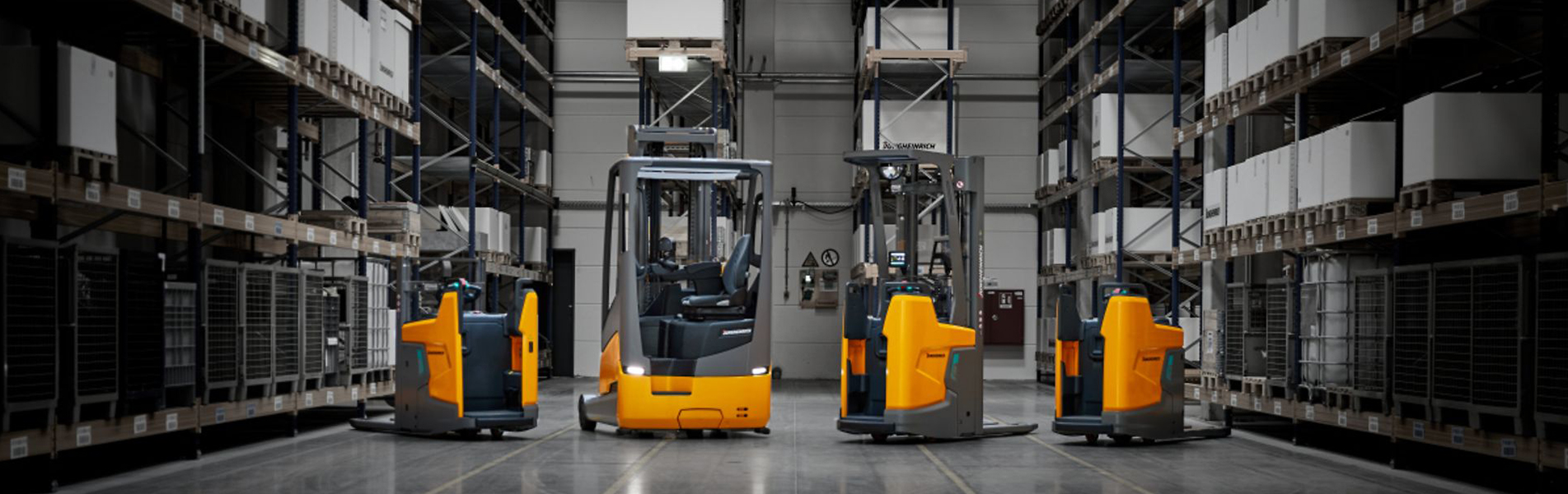
Customized electric forklift configurations for specialized working environments.
Application and Load Requirements
The first three questions establish what the machine needs to do. They influence almost every later decision, including forklift type, rated capacity, mast design, power system, tires, and attachments. A manufacturer cannot recommend the right configuration without understanding the actual handling task.
Question One: What Specific Job Is the Forklift Designed to Perform?
Ask the manufacturer to describe the intended application in detail. A useful recommendation should identify the materials being handled, the movement route, the loading and unloading process, the operating environment, and the required handling frequency.
Different materials create different handling challenges. Standard pallets of packaged products, steel coils, paper rolls, cable drums, long metal profiles, and oversized machinery components cannot always be handled safely with the same forklift configuration.
Consider the following details when describing your application:
What type of material will be handled?
What are the maximum and typical load weights?
What are the length, width, height, and shape of the load?
Does the material need to be lifted, rotated, clamped, tilted, or transported horizontally?
Will the truck operate indoors, outdoors, or between different work areas?
How many handling cycles are expected during a typical shift?
For example, a standard counterbalance forklift may be suitable for palletized goods, while a V-shaped coil truck is more appropriate for transporting cylindrical coil materials. Long steel profiles may require a multidirectional forklift or side loader to move through narrow storage aisles.
For applications involving coils, cable drums, heavy components, or oversized materials, review the customized material handling equipment range before deciding whether a conventional forklift is the right solution.
Ask the manufacturer to summarize the intended application in the quotation. This written description helps both parties confirm that the proposed machine is designed for the job you actually need it to perform.
Question Two: What Is the Required Load Capacity at the Maximum Lifting Height?
Do not select a forklift based only on its nominal rated capacity. The usable lifting capacity can change with lifting height, load center, mast configuration, and attachment selection.
A forklift rated at 5,000 kg in a particular standard configuration may have a lower allowable capacity when fitted with a different mast or attachment. The actual capacity must be confirmed for the complete configuration at the required lifting height and load center.
Provide the manufacturer with the following information:
Maximum load weight, including the heaviest load you expect to handle.
Load dimensions and center of gravity.
Required lifting height and load handling position.
Fork length, fork spacing, and any special fork requirements.
Attachment type and its weight, if applicable.
Load center is particularly important when handling long, wide, or irregularly shaped materials. A load with its center of gravity farther forward creates a greater overturning moment and can reduce the forklift's allowable capacity.
Ask for a capacity chart or rated capacity confirmation covering the actual mast, attachment, load center, and lifting height. The final data plate should reflect the approved configuration.
Question Three: What Duty Cycle and Daily Operating Hours Must the Forklift Handle?
Duty cycle describes how intensively the forklift will be used. It is not enough to tell the manufacturer that the truck will operate for a full shift. Explain how many hours it will travel, lift, wait, load, and unload during that period.
For example, a forklift used for occasional pallet movement in a small warehouse has different operating demands from a machine working continuously in a production facility or distribution center.
Discuss these operating conditions with the manufacturer:
Daily operating hours and number of shifts.
Average and peak handling cycles per hour.
Typical travel distance and lifting frequency.
Average load weight compared with maximum load weight.
Continuous operation, intermittent use, or frequent stop-and-start work.
Available maintenance windows and charging or refueling arrangements.
Duty cycle affects motor and hydraulic system selection, battery capacity, cooling requirements, component specifications, and preventive maintenance planning. A forklift intended for intensive use should be configured and maintained accordingly.
For electric forklifts, also explain the charging schedule and whether the equipment needs to operate across multiple shifts. The manufacturer can then evaluate the battery capacity and charger configuration based on the actual workload rather than relying on a nominal operating-time estimate.
Dimensional and Site Constraints
A customized forklift must fit the physical environment in which it will operate. Even when the rated capacity is sufficient, an unsuitable overall width, mast height, turning radius, or tire configuration can make the machine difficult to use.
A customized electric platform truck can be configured around load dimensions and factory transport routes.
Question Four: What Lifting Height, Mast Type, and Overhead Clearance Are Required?
Start by measuring the highest storage position or lifting point. Consider the pallet or material height, fork entry clearance, and the space needed to position and remove the load safely.
Next, measure the lowest overhead obstruction along the entire travel route. This may include door frames, roof structures, sprinkler pipes, lighting fixtures, trailer entrances, and mezzanine edges.
Ask the manufacturer to confirm the following mast specifications:
Maximum lifting height.
Collapsed mast height.
Free lift height, where applicable.
Overall height with the mast fully extended.
Mast type and number of stages.
Rated capacity at the required lifting height.
A two-stage, three-stage, or four-stage mast can have different lifting ranges and collapsed heights. The best choice depends on rack height, building clearance, load requirements, and the forklift's operating environment.
Attachments also need to be considered during mast selection. A boom, fork extension, clamp, or other accessory may change the load center and reduce the allowable capacity. Confirm the approved capacity of the complete forklift and attachment combination rather than relying on the base truck rating.
Question Five: What Aisle Width, Doorway Dimensions, and Turning Radius Must the Forklift Meet?
Measure the narrowest aisle, the smallest doorway, and the tightest turning point on the operating route. These measurements help determine whether the proposed forklift can move, turn, and position loads without contacting racks, walls, or other equipment.
Ask the manufacturer for the following dimensions of the proposed configuration:
Overall vehicle width and length.
Outside turning radius.
Right-angle stacking aisle width, where applicable.
Overhead guard height.
Collapsed mast height.
Dimensions with the specified tires and attachments installed.
Right-angle stacking aisle width is particularly useful when comparing forklifts for pallet storage. However, the required aisle width depends on pallet dimensions, load overhang, truck geometry, and the handling method. Do not assume that a published aisle figure applies to every pallet or operating condition.
Provide a warehouse layout or simple site drawing if possible. It helps the manufacturer understand turning points, rack positions, loading docks, and restricted areas.
For facilities handling long materials in narrow storage aisles, a multidirectional forklift may be worth considering. Its sideways travel capability can help move long loads through restricted spaces. See the electric and diesel multidirectional forklift range for available configurations.
Question Six: What Floor, Ramp, and Ground Conditions Will the Forklift Operate On?
Floor conditions influence tire selection, traction, ride quality, ground clearance, and the suitability of the forklift for indoor or outdoor operation.
Describe every surface the machine will encounter, including sealed concrete, epoxy-coated floors, dock plates, gravel yards, asphalt, ramps, freezer floors, and areas exposed to water or cleaning chemicals.
The following table provides a general starting point for discussing tire selection with the manufacturer:
Operating Surface
Tire Options to Evaluate
Key Considerations
Smooth indoor concrete
Cushion or solid tires
Traction, floor protection, turning, and wear
Epoxy or coated floors
Non-marking tire compounds
Floor marking, chemical compatibility, and tire wear
Mixed indoor and outdoor use
Solid pneumatic or other suitable solid tires
Ground clearance, surface transitions, and impact resistance
Rough outdoor ground
Pneumatic or suitable solid pneumatic tires
Traction, puncture risk, ground clearance, and ride quality
Cold storage
Cold-rated tire compounds
Temperature range, condensation, and floor conditions
Food or clean environments
Approved non-marking materials
Hygiene requirements and contamination control
These are general options, not universal specifications. Tire suitability depends on vehicle type, wheel loading, operating speed, floor condition, and the manufacturer's approved configuration.
Ramps and slopes require additional attention. Tell the manufacturer the maximum gradient, ramp length, surface material, and whether the truck will climb with or without a load. Ask for the relevant gradeability information under the intended operating conditions.
For cold storage, food processing, chemical facilities, or other specialized environments, also discuss corrosion resistance, material compatibility, battery performance, and any site-specific hygiene or safety requirements.
Power System Specifications
The power system should match the operating environment, working hours, ventilation conditions, and available energy infrastructure. Choosing a power source based only on the initial purchase price may overlook important operating requirements.
Question Seven: Which Power Source Is Suitable: Electric, Diesel, LPG, or Another Configuration?
Ask the manufacturer to explain why the proposed power source is appropriate for your application. The choice depends on where the forklift operates, how intensively it is used, and how the equipment will be refueled or recharged.
Power Source
Typical Applications
What to Check
Electric
Indoor warehouses, production areas, and environments with emission restrictions
Battery capacity, charging time, electrical infrastructure, and duty cycle
Diesel
Outdoor yards, heavy loads, ports, and demanding industrial applications
Engine specification, emissions requirements, fuel availability, and maintenance
LPG
Suitable mixed-use applications where permitted
Ventilation, local emissions rules, fuel storage, and refueling arrangements
Electric forklifts produce no exhaust emissions at the point of use, making them a common choice for indoor operations where local emission control matters. However, battery selection, charging infrastructure, operating hours, and ambient temperature must be considered.
Diesel forklifts may be suitable for outdoor and heavy-duty applications, but engine emissions, noise, and local regulations need to be evaluated. LPG equipment also requires suitable ventilation and compliance with the rules applicable to the worksite.
For heavy industrial applications, buyers can compare the available heavy-duty diesel forklift range with electric alternatives according to load capacity, terrain, and operating conditions.
Question Eight: What Battery Capacity, Charging Time, and Charging Infrastructure Are Required?
If you select an electric forklift, battery and charger specifications should be included in the initial quotation. A battery that is suitable for occasional use may not provide sufficient operating time for intensive or multi-shift applications.
Ask the manufacturer to confirm:
Battery chemistry, such as lead-acid or lithium-ion.
Battery voltage and rated capacity in amp-hours.
Expected operating time under the stated duty cycle.
Charging time and recommended charging method.
Charger voltage, current, and compatibility with the site power supply.
Battery replacement method and maintenance requirements.
Temperature requirements and any cold-storage configuration.
For multi-shift operations, discuss opportunity charging, battery exchange, and spare battery arrangements. The correct solution depends on the actual workload and available charging windows.
Also confirm whether the charger is included in the quotation. If it is supplied separately, make sure its electrical requirements and connection specifications are compatible with your facility.
Attachments and Tire Configuration
Attachments can make a standard forklift suitable for a specialized handling task, but they also affect capacity, load center, visibility, and operating characteristics. Tire selection must be finalized alongside the vehicle configuration rather than treated as a minor accessory choice.
Question Nine: Which Attachments Are Needed, and How Will They Affect Rated Capacity?
List all attachments required for the application before the manufacturer prepares the final quotation. Common options include side shifters, fork positioners, clamps, rotators, fork extensions, booms, and specialized handling frames.
Attachment
Typical Application
What to Confirm
Side shifter
Adjusting pallet position during stacking
Attachment weight, offset, and residual capacity
Fork positioner
Handling pallets with different fork spacing requirements
Fork range, attachment weight, and hydraulic requirements
Carton clamp
Handling suitable packaged or unitized loads without pallets
Clamping force, contact surface, and load stability
Rotator
Rotating or emptying compatible containers
Attachment weight, rotation range, and capacity rating
Specialized fork or handling frame
Coils, long materials, oversized loads, or irregular products
Load support, dimensions, center of gravity, and approved capacity
An attachment adds weight and may move the load center forward. This can reduce the forklift's allowable lifting capacity. The amount of reduction depends on the specific truck, attachment, and load arrangement; there is no single derating percentage that applies to every attachment.
Ask the manufacturer to provide the approved capacity for the complete configuration, including the attachment model and intended load. Confirm that the data plate and capacity information are updated where required by the applicable rules.
For coil handling, a purpose-built vehicle may be more suitable than fitting a general-purpose forklift with an improvised attachment. Bespoke Forklifts offers a non-standard customized electric coil truck with a V-shaped load support design and customized dimensions for coil transportation.
Specialized handling equipment can be designed around the shape and support requirements of the load.
Question Ten: Which Tire Type Matches the Floor Surface and Operating Environment?
Once the site conditions are known, ask the manufacturer to confirm the tire type, size, compound, and load rating for the proposed forklift.
Do not choose tires only by price or appearance. The wrong tire can affect traction, floor protection, turning performance, ground clearance, and service life.
Confirm whether the tires need to be non-marking, suitable for cold temperatures, resistant to particular chemicals, or capable of handling transitions between indoor and outdoor surfaces.
Ask for the final tire specification in the quotation. If the tire choice changes the overall vehicle dimensions or turning radius, request the revised measurements before approving the design.
Pre-Dispatch Testing and Compliance
Before shipment, the buyer needs evidence that the delivered forklift matches the approved technical specification. A manufacturer's statement that the equipment has passed inspection is useful, but it should be supported by relevant test records and documentation.
A customized vehicle should be checked against its approved drawings and specifications before dispatch.
Question Eleven: What Testing and Inspection Documents Will Be Provided Before Shipment?
Ask the manufacturer to explain the factory inspection process and list the tests applicable to your forklift configuration. Depending on the vehicle type and destination market, these may include checks of the lifting system, hydraulic functions, brakes, steering, electrical components, safety devices, and rated load performance.
Request documentation that identifies the actual machine being inspected. Useful records may include:
Final inspection report.
Applicable load test or rated capacity verification records.
Hydraulic and lifting system inspection records.
Brake and steering function checks.
Electrical system and safety device checks.
Serial numbers or traceability information for key components.
Final product photographs and, where agreed, inspection videos.
For customized equipment, compare the inspection results with the approved drawings, bill of materials, and technical specification. If the truck includes special attachments or a modified chassis, make sure those items are included in the inspection scope.
Agree on the inspection timing and document delivery process before production is completed. For important projects, buyers may also arrange a pre-shipment inspection or factory acceptance test before the equipment is released for shipment.
Question Twelve: Which Safety Standards and Compliance Documents Apply to the Destination Market?
Forklift compliance requirements depend on where the machine will be placed on the market and where it will be operated. Ask the manufacturer to identify the standards and documents applicable to the specific destination country and machine configuration.
Regulation or Standard
Region or Use
What Buyers Should Understand
OSHA 29 CFR 1910.178
United States workplace safety
Covers powered industrial truck operation and employer responsibilities, including training and safe use.
ANSI/ITSDF B56.1
United States industry standard
Provides safety requirements for applicable low-lift and high-lift powered industrial trucks.
ISO 3691 series
International technical reference
Addresses safety requirements and verification for industrial trucks, depending on the applicable part and truck type.
CE marking and applicable EU legislation
European Economic Area
Product conformity requirements for machinery placed on the relevant market, supported by the required technical documentation.
National and local requirements
Country- and site-specific
May include local product rules, emissions requirements, operator authorization, inspection, and language requirements.
These frameworks have different purposes and are not interchangeable. CE marking is not a substitute for OSHA workplace obligations, and ISO standards do not automatically replace national laws or local worksite rules.
For the United States, OSHA places workplace responsibilities on employers, including operator training and evaluation. It does not issue a universal individual forklift license. In the European market, buyers should confirm the legislation applicable on the date the equipment is placed on the market and request the corresponding conformity documentation.
Ask the manufacturer to confirm which documents will be supplied with the machine, such as the declaration of conformity where applicable, operating and maintenance manuals, capacity plate, technical information, and test records.
Do not accept a generic certificate as proof that every customized configuration meets every destination-market requirement. The documentation must correspond to the actual machine and its intended use.
After-Sales Service and Spare Parts
A custom forklift is a long-term equipment investment. Warranty coverage, replacement parts, technical support, and maintenance arrangements should be evaluated before the order is confirmed.
Question Thirteen: What Warranty Terms and Spare Parts Availability Are Offered?
Ask the manufacturer to provide a written warranty policy that identifies the coverage period, covered components, exclusions, and claim procedure.
Different components may have different warranty conditions. Confirm the terms for the chassis, mast, drive motor, controller, battery, hydraulic system, and supplied attachments.
Spare parts availability is equally important. A relatively inexpensive replacement component can create significant downtime if it is difficult to source or has a long delivery lead time.
Ask the manufacturer:
Which routine maintenance and wear parts are available?
Are key electrical and hydraulic components stocked?
What are the typical spare parts lead times?
Is a parts catalog or exploded diagram supplied?
Can replacement parts be identified by serial number or part number?
What is the process for submitting a warranty claim?
Are local service partners or technicians available in the destination market?
For customized machines, ask whether the manufacturer can maintain records of the special components and configuration used in your order. This makes future maintenance and replacement part identification easier.
Question Fourteen: What Operator Training, Maintenance Guidance, and Technical Support Are Included?
Ask what support is available after delivery. A good handover should include the documentation and practical information needed to operate and maintain the machine correctly.
Depending on the order, support may include:
Operating and maintenance manuals.
Basic operation and safety guidance.
Instructions for using the supplied attachments.
Preventive maintenance schedules.
Electrical and hydraulic system diagrams, where applicable.
Remote technical assistance and troubleshooting.
Spare parts ordering support.
Software or controller support, where applicable.
For specialized equipment, such as coil trucks, multidirectional forklifts, and heavy-duty platform trucks, the operating procedure may differ from that of a conventional counterbalance forklift. Make sure the training and manuals address the actual machine and its attachments.
Also confirm the expected response process for technical questions and equipment faults. If the manufacturer offers local service support, ask for the relevant contact information and service coverage details.
Pricing, Lead Time, and Purchase Agreement
The final purchasing decision should consider the complete cost and delivery commitment, not just the equipment's initial unit price. A customized forklift may involve engineering, special components, testing, packaging, and shipping arrangements that need to be included in the quotation.
Question Fifteen: What Is the Total Delivered Cost, Production Lead Time, and Payment Schedule?
Ask the manufacturer for an itemized quotation that clearly identifies what is included and what is excluded. This makes it easier to compare different suppliers on the same basis.
Check whether the quotation includes:
Base vehicle and customized configuration.
Mast, battery, charger, tires, and attachments.
Engineering or special design costs, if applicable.
Testing, inspection, and documentation.
Packaging and export preparation.
Inland transportation and international freight, if quoted.
Insurance, duties, taxes, and destination charges, where applicable.
Installation, commissioning, or training, if included.
Lead time should also be broken into clear stages. A custom forklift may require additional engineering and procurement time compared with a standard machine. Ask the manufacturer to identify the expected schedule for design approval, material procurement, production, testing, and shipment.
Payment terms vary by manufacturer, order value, customization complexity, and trade agreement. Rather than assuming a fixed deposit or milestone percentage is standard, agree on a schedule that clearly connects payment obligations with documented project progress.
Before signing, clarify the following commercial terms:
Quotation validity period and currency.
Deposit and milestone payment conditions.
Design approval and specification change procedures.
Production completion and inspection requirements.
Shipment terms and delivery responsibilities.
Remedies for delays or failure to meet agreed specifications.
Warranty start date and after-sales obligations.
Make sure the purchase agreement includes the approved technical specification, drawings, rated capacity, attachments, compliance documents, inspection requirements, delivery schedule, and warranty conditions. Any important verbal promise should be converted into a written commitment.
What Types of Custom Forklifts Can a Manufacturer Provide?
Not every special material handling requirement needs a modified standard forklift. In some applications, a purpose-built vehicle is more suitable because the load shape, handling direction, platform dimensions, or operating process differs significantly from conventional pallet handling.
Bespoke Forklifts provides a range of material handling equipment, including electric counterbalance forklifts, reach trucks, multidirectional forklifts, heavy-duty diesel forklifts, and customized material handling vehicles.
For example, its customized material handling equipment range includes the following product types:
Customized electric coil trucks
Coil trucks are designed for handling cylindrical materials such as steel coils and other coil products. The V-shaped support structure helps position the coil, while dimensions and load capacity can be configured according to the handling application. The product page lists a capacity of up to 40 tons for its coil truck offering, with the final configuration subject to the specific model and order requirements.
Specialized electric handling equipment for material transfer inside industrial facilities.
Heavy-duty electric platform trucks
Electric platform trucks are used to transport large, heavy, or oversized materials across factory floors and between production areas. Platform dimensions, lifting stroke, steering, and drive configuration can be selected according to the load and site layout. The NTP80-300 product specification lists an 8,000–30,000 kg capacity range and stand-on or seated operating options.
Heavy-duty electric pallet trucks
Heavy-duty pallet trucks are designed for moving palletized loads where the required capacity exceeds that of many standard warehouse pallet trucks. Battery type, operating position, and handling requirements should be confirmed for the intended application.
For long materials such as metal profiles, pipes, or timber, multidirectional forklifts can also be considered. Their multi-directional travel capability helps move long loads in warehouse layouts where conventional turning space is limited.
The right solution depends on the load dimensions, transport distance, handling frequency, floor conditions, and available operating space. Review the product specifications and discuss the actual application with the manufacturer before deciding on a machine type.
Why Consider Bespoke Forklifts for Customized Material Handling Equipment?
Shanghai Zon-Cho Huge Science and Technology Co., Ltd. operates the Bespoke Forklifts website and offers material handling equipment for warehouse, manufacturing, logistics, and heavy industrial applications.
The company's product range covers electric counterbalance forklifts, electric reach trucks, customized material handling equipment, electric and diesel multidirectional forklifts, very narrow aisle forklifts, heavy-duty diesel forklifts, aerial work equipment, and electric heavy-duty towing tractors.
For buyers with non-standard handling requirements, the customized equipment range is particularly relevant. It includes heavy-duty pallet trucks, coil trucks, and electric platform trucks designed around different material dimensions and transport needs.
The manufacturer also describes its experience in electric material handling equipment production and R&D, along with customized equipment development and technical support. Buyers should still evaluate the specific engineering proposal, inspection records, warranty terms, and service arrangements for the model they intend to purchase.
Before requesting a quotation, prepare your load details, site measurements, duty cycle, and preferred configuration. This allows the technical team to assess the application and recommend a more relevant solution.
If your project involves a special load shape, unusual lifting requirement, limited operating space, or heavy-duty factory transport, you can contact the Bespoke Forklifts team with your technical requirements for further discussion.
Final Checklist Before Placing a Custom Forklift Order
Before confirming the order, review the following information with the manufacturer. It helps ensure that the final machine matches the application and that important commercial details are documented.
Item to Confirm
Required Information
Application
Material type, handling process, and operating environment
Load requirements
Maximum load, dimensions, load center, and lifting height
Duty cycle
Daily hours, shifts, and handling frequency
Site dimensions
Aisle width, door clearance, turning space, and overhead restrictions
Operating conditions
Floor, ramps, temperature, and indoor or outdoor use
Power system
Electric, diesel, LPG, battery, charger, or fuel arrangements
Attachments
Attachment type, weight, hydraulic requirements, and revised capacity
Safety and compliance
Applicable standards, capacity plate, manuals, and conformity documents
Inspection
Testing scope, inspection report, and pre-shipment acceptance
After-sales support
Warranty, spare parts, service contacts, and technical assistance
Commercial terms
Total delivered cost, lead time, payment schedule, and contract conditions
A custom forklift should be specified around the actual handling task, not simply selected by capacity or price. Clear technical requirements, written confirmations, and a defined inspection process help buyers reduce the risk of receiving equipment that does not fit the intended application.
Frequently Asked Questions About Custom Forklift Manufacturers
What information should I provide to a custom forklift manufacturer before requesting a quotation?
Provide the material type, maximum load weight, load dimensions, load center, lifting height, aisle width, floor conditions, operating hours, power preference, and any required attachments. Photos, drawings, and a warehouse layout can help the manufacturer understand the application more accurately.
How long does it take to manufacture a custom forklift?
Lead time depends on the complexity of the customization, engineering approval, component availability, production schedule, testing, and shipping arrangements. Ask the manufacturer to provide a project timeline covering design, procurement, assembly, inspection, and dispatch rather than relying on a general delivery estimate.
How do I confirm whether a custom forklift has enough lifting capacity?
Check the rated capacity at the required lifting height and load center, including the effects of the mast and attachments. Request the approved capacity chart or written capacity confirmation for the complete configuration, and make sure the delivered data plate reflects the approved setup.
Can a standard forklift be modified for a special application?
Some applications can be addressed through approved modifications, attachments, or configuration changes. However, modifications that affect lifting capacity, stability, or safe operation must be evaluated and approved according to the applicable requirements. For unusual loads or handling processes, a purpose-built material handling vehicle may be more suitable.
What is the difference between a customized forklift and customized material handling equipment?
A customized forklift generally refers to a forklift adapted with a particular capacity, mast, power system, dimensions, tires, or attachments. Customized material handling equipment can cover a wider range of vehicles, including coil trucks, heavy-duty pallet trucks, and electric platform trucks designed for specific loads and transport processes.
How do forklift attachments affect lifting capacity?
Attachments add weight and may move the load center forward, reducing the allowable lifting capacity. The actual capacity depends on the forklift, attachment, load dimensions, and lifting height. Always request the approved capacity for the complete configuration rather than applying a general reduction percentage.
What documents should I request before a custom forklift is shipped?
Depending on the machine and destination market, request the final technical specification, approved drawings, capacity plate information, applicable conformity documents, inspection and test reports, operating and maintenance manuals, and serial number records for relevant components.
What should be included in a custom forklift warranty?
The warranty should identify the coverage period, covered components, exclusions, maintenance requirements, claim procedure, and responsibilities for replacement parts or repairs. Confirm whether the chassis, mast, motor, controller, battery, and attachments have separate warranty conditions.
Is an electric forklift suitable for heavy-duty customized applications?
Electric forklifts can be suitable for many heavy-duty applications when the vehicle structure, motor, hydraulic system, battery, and rated capacity are engineered for the intended workload. Buyers should evaluate the actual load, operating hours, floor conditions, and charging arrangements before selecting an electric configuration.
How can I compare quotations from different custom forklift manufacturers?
Compare the same technical requirements across all quotations, including rated capacity, lifting height, load center, dimensions, power system, battery, attachments, testing, compliance documents, warranty, spare parts, delivery terms, and total delivered cost. A lower initial price does not necessarily represent the better long-term solution.
Choosing a custom forklift manufacturer is ultimately about finding a supplier that understands your material handling process and can translate it into a suitable, documented equipment configuration. Ask the right questions before ordering, verify the technical details, and make sure every important commitment is included in the final agreement.
{
"@context": "https://schema.org",
"@type": "FAQPage",
"mainEntity": [
{
"@type": "Question",
"name": "What information should I provide to a custom forklift manufacturer before requesting a quotation?",
"acceptedAnswer": {
"@type": "Answer",
"text": "Provide the material type, maximum load weight, load dimensions, load center, lifting height, aisle width, floor conditions, operating hours, power preference, and any required attachments. Photos, drawings, and a warehouse layout can help the manufacturer understand the application more accurately."
}
},
{
"@type": "Question",
"name": "How long does it take to manufacture a custom forklift?",
"acceptedAnswer": {
"@type": "Answer",
"text": "Lead time depends on the complexity of the customization, engineering approval, component availability, production schedule, testing, and shipping arrangements. Ask the manufacturer to provide a project timeline covering design, procurement, assembly, inspection, and dispatch rather than relying on a general delivery estimate."
}
},
{
"@type": "Question",
"name": "How do I confirm whether a custom forklift has enough lifting capacity?",
"acceptedAnswer": {
"@type": "Answer",
"text": "Check the rated capacity at the required lifting height and load center, including the effects of the mast and attachments. Request the approved capacity chart or written capacity confirmation for the complete configuration, and make sure the delivered data plate reflects the approved setup."
}
},
{
"@type": "Question",
"name": "Can a standard forklift be modified for a special application?",
"acceptedAnswer": {
"@type": "Answer",
"text": "Some applications can be addressed through approved modifications, attachments, or configuration changes. However, modifications that affect lifting capacity, stability, or safe operation must be evaluated and approved according to the applicable requirements. For unusual loads or handling processes, a purpose-built material handling vehicle may be more suitable."
}
},
{
"@type": "Question",
"name": "What is the difference between a customized forklift and customized material handling equipment?",
"acceptedAnswer": {
"@type": "Answer",
"text": "A customized forklift generally refers to a forklift adapted with a particular capacity, mast, power system, dimensions, tires, or attachments. Customized material handling equipment can cover a wider range of vehicles, including coil trucks, heavy-duty pallet trucks, and electric platform trucks designed for specific loads and transport processes."
}
},
{
"@type": "Question",
"name": "How do forklift attachments affect lifting capacity?",
"acceptedAnswer": {
"@type": "Answer",
"text": "Attachments add weight and may move the load center forward, reducing the allowable lifting capacity. The actual capacity depends on the forklift, attachment, load dimensions, and lifting height. Always request the approved capacity for the complete configuration rather than applying a general reduction percentage."
}
},
{
"@type": "Question",
"name": "What documents should I request before a custom forklift is shipped?",
"acceptedAnswer": {
"@type": "Answer",
"text": "Depending on the machine and destination market, request the final technical specification, approved drawings, capacity plate information, applicable conformity documents, inspection and test reports, operating and maintenance manuals, and serial number records for relevant components."
}
},
{
"@type": "Question",
"name": "What should be included in a custom forklift warranty?",
"acceptedAnswer": {
"@type": "Answer",
"text": "The warranty should identify the coverage period, covered components, exclusions, maintenance requirements, claim procedure, and responsibilities for replacement parts or repairs. Confirm whether the chassis, mast, motor, controller, battery, and attachments have separate warranty conditions."
}
},
{
"@type": "Question",
"name": "Is an electric forklift suitable for heavy-duty customized applications?",
"acceptedAnswer": {
"@type": "Answer",
"text": "Electric forklifts can be suitable for many heavy-duty applications when the vehicle structure, motor, hydraulic system, battery, and rated capacity are engineered for the intended workload. Buyers should evaluate the actual load, operating hours, floor conditions, and charging arrangements before selecting an electric configuration."
}
},
{
"@type": "Question",
"name": "How can I compare quotations from different custom forklift manufacturers?",
"acceptedAnswer": {
"@type": "Answer",
"text": "Compare the same technical requirements across all quotations, including rated capacity, lifting height, load center, dimensions, power system, battery, attachments, testing, compliance documents, warranty, spare parts, delivery terms, and total delivered cost. A lower initial price does not necessarily represent the better long-term solution."
}
}
]
}