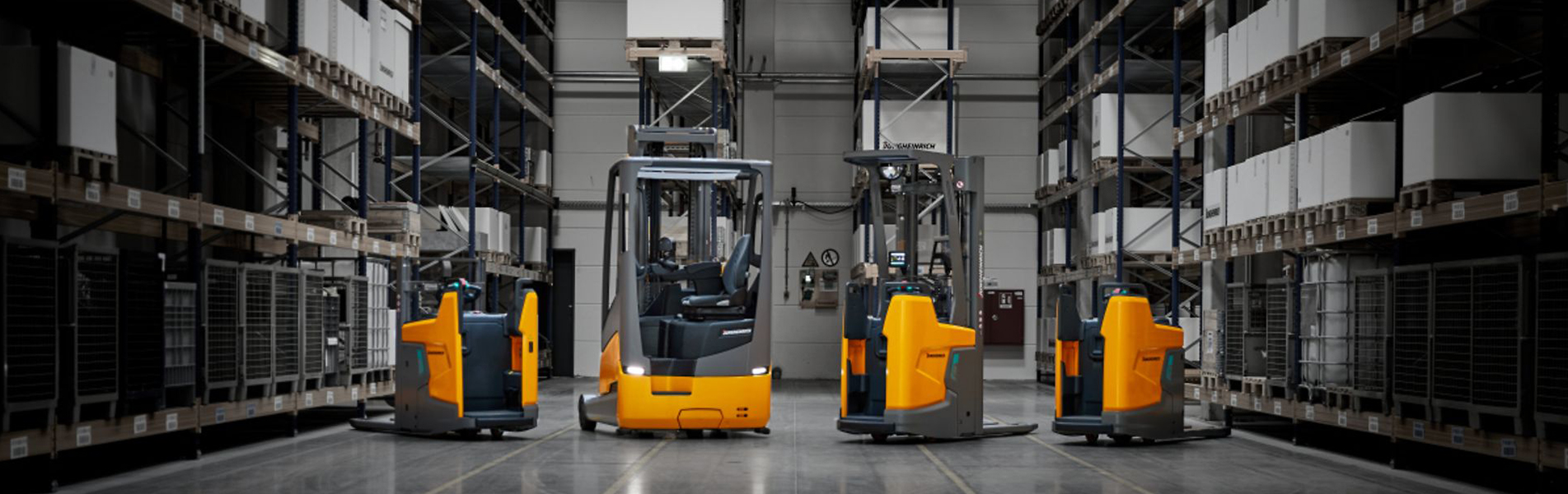
How to Choose the Right Custom Forklift Load Capacity, Lift Height and Dimensions
Nov 11, 2026
Choosing the right custom forklift is not simply a matter of selecting a truck with enough lifting capacity. The forklift must also reach the required storage height, fit through warehouse aisles, maneuver around obstacles, and handle the actual dimensions and weight distribution of your materials. A mismatch in any of these specifications can affect operating efficiency, storage capacity, and workplace safety.
For businesses purchasing customized material handling equipment, three specifications deserve particular attention: load capacity, lifting height, and overall forklift dimensions. These parameters are closely connected. Increasing the lifting height may change the available load capacity, while a longer chassis or wider body can affect turning radius and aisle requirements.
Bespoke Forklifts provides customized electric forklifts, reach trucks, multi-directional forklifts, and specialized material handling equipment for different industrial applications. This guide explains how to evaluate the essential specifications before requesting a custom forklift quotation.
Why Forklift Specifications Must Match Your Application
A forklift that works well in a general warehouse may not be suitable for a steel processing plant, cold storage facility, paper mill, or manufacturing workshop. Each environment has different load characteristics, working spaces, and handling requirements.
For example, a warehouse handling standard pallets may need a 2.5-ton electric forklift with a conventional mast. A metal processing facility transporting long steel profiles may require a multi-directional forklift with a wider body, specialized fork positioning, and a different load distribution design.
Before selecting a model, consider these basic application factors:
Maximum weight of individual loads and typical working load.
Load length, width, height, and center of gravity.
Maximum rack height and required lifting height.
Warehouse aisle width, turning space, and doorway clearance.
Indoor or outdoor operating conditions.
Floor conditions, gradients, and available overhead clearance.
Required attachments and daily operating hours.
These details help a forklift manufacturer determine whether a standard model can meet the requirements or whether a customized design is more appropriate.
How to Determine the Right Forklift Load Capacity
Load capacity is one of the most important specifications when purchasing a custom forklift. It refers to the maximum weight that a forklift can safely lift under a defined configuration and rated load center.
However, the rated capacity printed on a forklift specification sheet does not necessarily represent the actual weight the machine can lift in every working condition. Load center, lifting height, mast configuration, and attachments can all affect the available capacity.
Start with the Maximum Actual Load Weight
Identify the heaviest load the forklift will handle during normal operations, rather than using only the average load weight. Also consider whether the truck will carry unusually heavy materials occasionally.
For example, if a warehouse regularly handles 1,800 kg pallets but occasionally needs to move 2,400 kg materials, the manufacturer should evaluate the design against the heavier requirement.
When calculating the required capacity, provide:
Maximum material weight.
Average material weight.
Load dimensions and packaging.
Distance between the fork face and the load center of gravity.
Required lifting height when handling the maximum load.
Any additional attachment weight.
Understand the Importance of Load Center
Load center is the horizontal distance from the vertical face of the forks to the load's center of gravity. A standard pallet load may have a 500 mm or 600 mm load center, depending on its dimensions and weight distribution.
When the load center increases, the load moment also increases. This creates greater forward tipping forces and may reduce the forklift's allowable lifting capacity.
A simplified relationship is:
Load Moment = Load Weight × Load Center Distance
For example, a 2,000 kg load at a 500 mm load center produces a load moment of 1,000,000 kg·mm. If the same load extends to a 700 mm load center, the load moment increases to 1,400,000 kg·mm.
This is why a forklift designed for standard pallets may not be suitable for handling longer materials without engineering evaluation.
The relationship above illustrates the change in load moment; it is not a substitute for the manufacturer's rated capacity chart or stability assessment.
Consider Attachments and Special Loads
Attachments such as side shifters, fork positioners, clamps, rotators, and specialized fork assemblies add weight and may move the load center forward. Consequently, the available lifting capacity can be lower than the original rated capacity.
For example, businesses handling paper rolls, steel coils, cable drums, or irregular machinery may need specially designed forks or handling equipment rather than standard pallet forks.
Bespoke Forklifts offers customized material handling solutions, including heavy-duty electric coil trucks, pallet trucks, and platform trucks for non-standard load requirements.
View Customized Material Handling Equipment to understand the available solutions for specialized industrial loads.
How to Select the Correct Forklift Lifting Height
Forklift lifting height determines how high the machine can raise a load. It is particularly important in warehouses with multi-level pallet racking, high-bay storage systems, and manufacturing facilities with elevated material handling requirements.
One common mistake is selecting a forklift based only on the height of the highest storage rack. The actual required lifting height should account for pallet height, clearance above the load, and the position of the forks when placing or retrieving materials.
Measure the Highest Required Storage Position
Start by measuring the height of the highest pallet storage level. Then consider the height of the pallet and the additional clearance required for safe placement.
For example, if the highest rack beam is 7,000 mm above the floor, the actual fork lifting requirement may need to be higher depending on the pallet dimensions and rack configuration.
Provide the manufacturer with the following measurements:
Height of the highest rack beam.
Overall height of the pallet and goods.
Required fork elevation during loading and unloading.
Ceiling height and overhead obstructions.
Doorway height and transportation clearance.
Understand Maximum Lift Height and Mast Height
Maximum lifting height and mast height are different measurements. A forklift may lift a load to 8 meters while having a collapsed mast height that is considerably lower.
When selecting a custom forklift, check these specifications separately:
Maximum lifting height: The highest position the forks can reach.
Collapsed mast height: The overall mast height when fully lowered.
Free lift: The distance the forks can rise before the mast begins to extend, depending on mast configuration.
Overall lowered height: The truck's height when the mast and overhead structure are in their transport position.
These measurements are especially important for facilities with low ceilings, container loading operations, and restricted warehouse doorways.
Check Load Capacity at Maximum Lifting Height
A forklift's rated capacity may decrease as lifting height increases, depending on the truck design, load center, mast, and attachment configuration.
For example, a forklift rated for 2,500 kg at a specified standard load center should not automatically be assumed to lift 2,500 kg at its maximum mast height.
Always request a load capacity chart or written capacity confirmation for the exact forklift configuration. The manufacturer's engineering team should verify the maximum permissible load at the required lifting height.
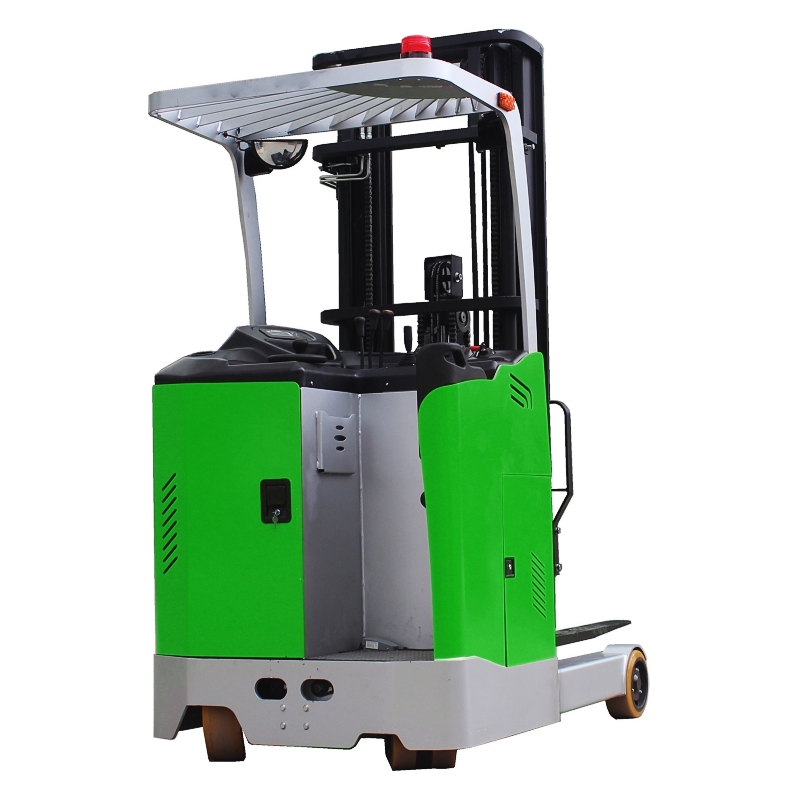
For high-rack warehouse operations, electric reach trucks are worth considering. Bespoke Forklifts offers reach truck models with load capacities ranging from 1.5 to 3.0 tons and lifting heights from 3.0 to 12.0 meters, depending on the model and configuration.
Electric reach truck for warehouse storage and high-level pallet handling.
How to Choose the Right Custom Forklift Dimensions
Forklift dimensions directly affect whether the machine can operate efficiently in your facility. Even when a forklift has sufficient lifting capacity and mast height, it may still be unsuitable if its body is too wide, its turning radius is too large, or its overall length prevents it from maneuvering through the available space.
Before confirming the design, evaluate the following dimensions.
Overall Length and Fork Length
Overall forklift length includes the truck body and, depending on the specification, the forks. Buyers should confirm exactly how the manufacturer defines this measurement.
Fork length should match the dimensions and weight distribution of the materials being handled. Forks that are too short may not provide sufficient support, while excessively long forks can create maneuvering difficulties and interfere with nearby loads or racks.
For long materials, wide loads, or non-standard pallets, fork length, fork spacing, and fork positioning should be evaluated together.
Overall Width and Aisle Requirements
Forklift width determines whether the truck can travel through doorways, warehouse aisles, and production areas without interference.
Measure the narrowest operating aisle rather than relying on the average aisle width. Also consider the space needed to turn, approach a pallet, and position the load.
Different forklift types have different maneuvering requirements:
Counterbalance forklifts: Suitable for general material handling where sufficient turning space is available.
Reach trucks: Designed for warehouse applications requiring compact maneuvering and high-level pallet storage.
Very narrow aisle forklifts: Suitable for high-density storage systems with restricted aisle widths.
Multi-directional forklifts: Particularly useful for transporting long materials through narrow warehouse aisles.
For facilities handling long steel profiles, aluminum sections, timber, or pipes, a multi-directional forklift can provide a more practical solution than a conventional counterbalance forklift. Its sideways travel capability helps reduce the space needed to maneuver long loads.
Turning Radius and Working Aisle Width
Turning radius is another important specification for warehouse forklift selection. A smaller turning radius generally helps the forklift maneuver in confined spaces, but it does not independently determine the minimum aisle width.
The actual aisle requirement also depends on the truck's overall length, fork dimensions, pallet size, load overhang, steering angle, and handling configuration.
Ask the manufacturer to provide the Ast (right-angle stacking aisle width) specification for your actual pallet dimensions and handling direction. This gives buyers a more useful reference than considering turning radius alone.
Example of a forklift dimensional and turning clearance drawing.
Ground Clearance and Wheelbase
Ground clearance affects the forklift's ability to travel over floor joints, ramps, and uneven surfaces. Wheelbase influences stability, turning performance, and overall vehicle dimensions.
For indoor warehouse applications, a compact design may be more important. For outdoor industrial operations, ground clearance, tire selection, and chassis strength may deserve greater attention.
Match Forklift Type to Your Load and Working Environment
Choosing the correct forklift type is just as important as selecting individual specifications. Different forklift designs are developed for different material handling conditions.
Forklift Type
Typical Application
Main Selection Focus
Electric Counterbalance Forklift
General warehouses and manufacturing plants
Load capacity, body width and turning radius
Electric Reach Truck
High-rack and narrow-aisle warehouses
Lifting height, residual capacity and aisle width
Very Narrow Aisle Forklift
High-density storage facilities
Aisle width, mast height and guidance system
Multi-Directional Forklift
Steel profiles, pipes, timber and long materials
Load length, side travel and fork configuration
Heavy-Duty Diesel Forklift
Ports, mines, metal processing and outdoor heavy-duty operations
Heavy load capacity, tires and operating conditions
Customized Material Handling Equipment
Coils, oversized goods and specialized industrial loads
Load shape, support structure and customized dimensions
For example, Bespoke Forklifts provides electric and diesel multi-directional forklift solutions with capacities ranging from 1.5 to 5.0 tons and lifting heights from 3 to 8 meters, depending on the configuration.
Businesses working with extremely long or bulky materials should evaluate the very narrow aisle forklift range as well as specialized multi-directional equipment, particularly when warehouse space is limited.
Real Forklift Specification Example: Matching Capacity, Height and Dimensions
Looking at an actual product specification is a practical way to understand how forklift parameters work together.
For example, Bespoke Forklifts lists an NRZ25 stand-on electric reach truck with a rated capacity of 2,500 kg and a lifting height range of 3,000 to 10,000 mm.
Its published specifications include the following parameters:
Specification
Published Value
Model
NRZ25
Rated Load Capacity
2,500 kg
Lifting Height
3,000–10,000 mm
Load Center
500 mm
Wheelbase
1,693 mm
Minimum Turning Radius
1,996 mm
Aisle Width for 1000 × 1200 mm Pallet (Crossways)
3,042 mm
Battery Voltage/Capacity
48V/400Ah
This example demonstrates why buyers should review a complete specification sheet instead of comparing forklifts using rated capacity alone.
A 2,500 kg rated load, a 10-meter lifting height, and a 3,042 mm aisle requirement describe different aspects of the same machine. The suitability of this configuration still depends on the actual load, lifting position, and operating environment.
When requesting a customized version, buyers should also confirm the actual capacity at maximum lift height, collapsed mast height, overall truck dimensions, and compatibility with their warehouse layout.
Custom Forklift Requirements: Information to Prepare Before Requesting a Quote
A detailed specification sheet helps a manufacturer understand your application and avoid unnecessary design revisions. Rather than requesting a forklift based on a general description, provide measurable information about your loads and facility.
The following checklist can help purchasing managers and warehouse engineers prepare their requirements.
Requirement
Information to Provide
Load Weight
Maximum and average load in kg or tons
Load Dimensions
Length, width and height in mm
Load Center
Horizontal distance from fork face to load center of gravity
Lifting Height
Required maximum fork elevation
Mast Height
Collapsed mast and overhead clearance requirements
Fork Specifications
Fork length, width, spacing and attachment requirements
Operating Space
Aisle width, doorway width and turning clearance
Floor Conditions
Floor material, gradients and surface conditions
Working Environment
Indoor, outdoor, cold storage or special environments
Operating Hours
Daily working hours and shift requirements
Photos, engineering drawings, pallet samples, and warehouse layout plans can make the design process more accurate. If you are handling unusual materials, photographs showing how the loads are currently lifted and transported are particularly useful.
For more details about preparing technical requirements, see custom forklift requirements and application considerations.
Why Work with Bespoke Forklifts for Customized Equipment?
Not every material handling requirement can be met by an off-the-shelf forklift. Some businesses need a narrower chassis, extended forks, higher lifting height, specialized attachments, or a higher-capacity truck designed around unusual load dimensions.
Bespoke Forklifts focuses on customized electric forklifts and industrial material handling equipment for different operating conditions.
Its product range covers:
Electric counterbalance forklifts: Three-wheel and four-wheel configurations, including narrow-body and heavy-duty options.
Electric reach trucks: Stand-on, seated, and double-deep configurations for warehouse storage.
Multi-directional forklifts: Designed for long materials and restricted working spaces.
Very narrow aisle forklifts: Solutions for high-density warehouse operations.
Customized material handling equipment: Heavy-duty coil trucks, pallet trucks, and platform trucks for specialized loads.
The appropriate solution depends on the actual application rather than simply choosing the largest available capacity or the highest lifting mast.
When working with a manufacturer, make sure the final proposal includes the approved rated capacity, load center, lifting height, mast dimensions, overall vehicle dimensions, turning radius, and required aisle width.
For customized projects, you can contact Bespoke Forklifts with your load specifications and working environment to discuss a suitable equipment configuration.
Frequently Asked Questions About Custom Forklift Specifications
What load capacity should I choose for a custom forklift?
Choose a forklift based on the maximum actual load weight, load center, lifting height, and attachment configuration. The manufacturer's capacity chart should confirm that the truck can safely handle the required load under the intended operating conditions.
Does forklift lifting capacity decrease at greater lifting heights?
It can. A higher lifting position may reduce the allowable capacity depending on mast design, load center, truck stability, and attachments. Always check the rated capacity at the required lifting height rather than relying only on the nominal capacity.
How do I calculate the required forklift lifting height?
Measure the highest required fork elevation based on the top storage position, pallet height, load height, and placement clearance. Also check collapsed mast height and building overhead clearance to ensure the forklift can travel safely through the facility.
How do forklift dimensions affect warehouse aisle requirements?
Overall length, width, turning radius, fork length, and pallet dimensions all influence the required operating aisle. Ask the manufacturer for the Ast right-angle stacking aisle width based on your actual pallet size and handling direction.
Can a forklift be customized for narrow warehouse spaces?
Yes. Depending on the application, manufacturers can provide narrow-body electric forklifts, reach trucks, and very narrow aisle forklifts. The final configuration should be evaluated against aisle width, load dimensions, turning clearance, and stability requirements.
What information should I send to a custom forklift manufacturer?
Provide maximum load weight, load dimensions, load center, lifting height, aisle width, floor conditions, operating environment, and attachment requirements. Photos and warehouse layout drawings can further improve the accuracy of the proposed design.
Is a higher-capacity forklift always a better choice?
No. A higher-capacity forklift may have a larger chassis, greater operating weight, and larger turning requirements. The best choice is a machine that meets the actual load and lifting requirements while fitting the available workspace.
Can one custom forklift handle different load sizes?
Yes, provided the forklift is engineered and rated for the different load configurations. Load centers, fork spacing, attachments, and load distribution must be evaluated for each intended application.
Final Selection Advice
The right custom forklift is the one that can handle your heaviest required load at the correct lifting height while fitting the available working space. Load capacity, load center, mast configuration, overall dimensions, and aisle clearance should always be evaluated together.
By preparing accurate technical information before purchasing, businesses can reduce specification mismatches and work with Bespoke Forklifts to develop a material handling solution that fits their actual production and warehouse requirements.